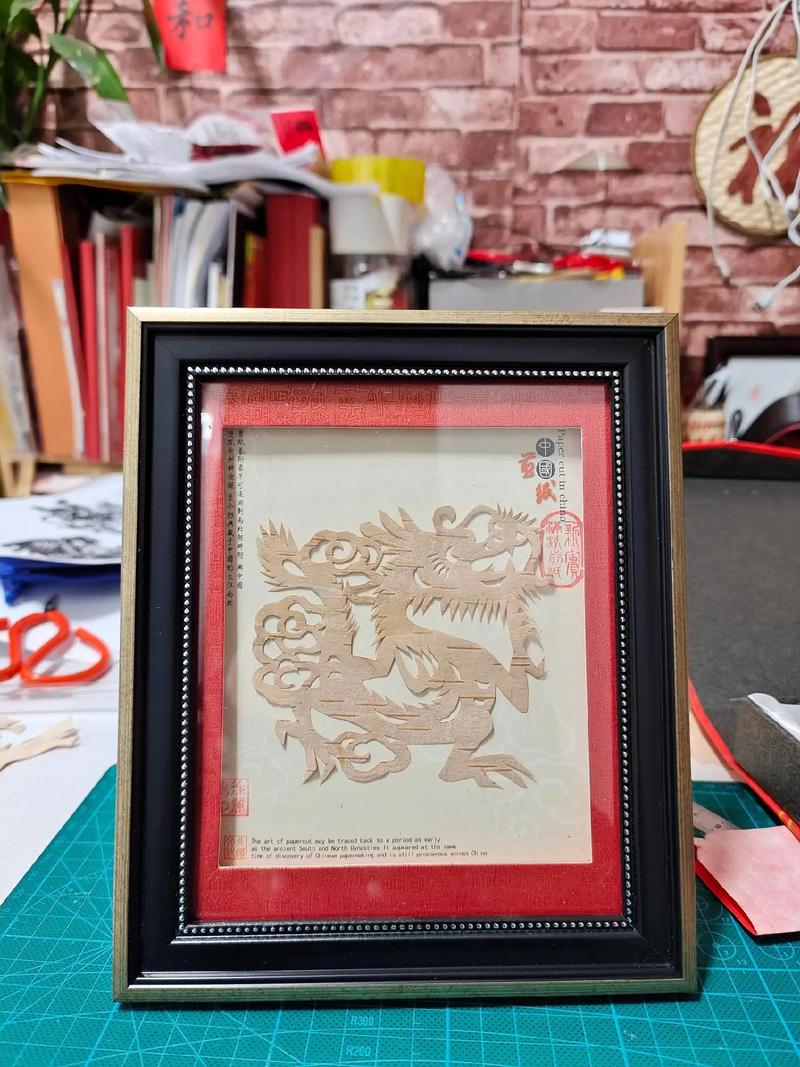
In Xinbin Manchu Autonomous County in eastern Liaoning, a fertile land that nurtured Manchu civilization, there is an art that requires no brush or ink. With just a pair of scissors and a piece of red paper, it can tell the story of thousands of years of folk customs and various feelings——it is Xinbin Manchu Paper-Cutting. As a "living fossil" of Manchu culture, this ancient craft came from the Jurchen period and has gone through more than 300 years of trials and hardships. Between the flow of fingers, it engraves a nation's beliefs, life and expectations into the square inch of paper, becoming a dazzling bright spot among the national intangible cultural heritage and a cultural bridge connecting ancient and modern times, China and foreign countries.
The unique charm of Xinbin Manchu Paper-Cutting first comes from its inherent national genes and impromptu ingenuity. Different from other Paper-Cutting schools, the most distinctive feature of Xinbin Manchu Paper-Cutting is that it "does not trace, draw or lay a draft". Artists rely entirely on their intentions and experience, letting the scissors move with their hearts in one go, and every cut hides a natural aura. This impromptu creation technique not only comes from the bold and unrestrained national character of the Manchu people, but also is closely related to the influence of Shaman culture. In ancient times, Paper-Cutting was a totem for Shamans to communicate with heaven and earth in sacrifices. Artists needed to let the scissors flow with faith with the purest intentions to cut out "spiritual" works, carrying the beautiful wishes of praying for blessings, eliminating disasters, warding off evil spirits and welcoming good luck.
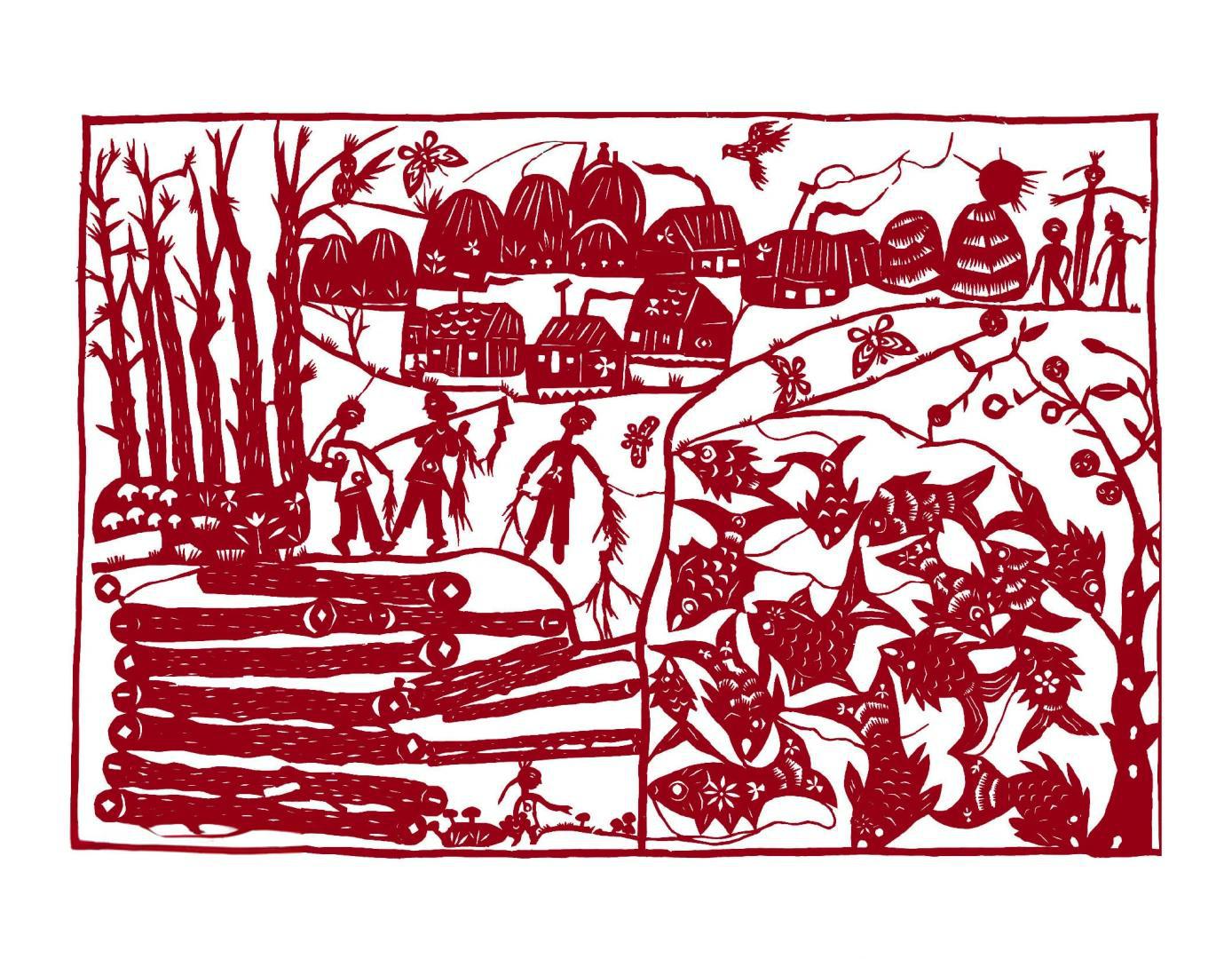
Its artistic style is even more unique, with delicacy hidden in roughness and profundity in simplicity. Xinbin Manchu Paper-Cutting has a concise and generalized shape, rough and smooth lines, and a strong contrast between red and white. The pictures are often matched with Manchu characters to achieve both pictures and texts, showing distinct national characteristics. According to the needs of the picture, artists will also use charcoal, cigarette butts or incense heads to iron out dots and lines to enhance the layering and expressiveness of the work. This unique ironing technique has become a symbolic skill that distinguishes Xinbin Paper-Cutting from other schools. In addition, the unique hanging thread Paper-Cutting and three-dimensional combined Paper-Cutting in Xinbin are quite peculiar. The hanging thread Paper-Cutting is hung in front of the window, swaying vividly when the breeze blows, while the three-dimensional Paper-Cutting breaks the plane limitation, making the Paper-Cutting image lifelike, showing the ingenuity and wisdom of Manchu artists.
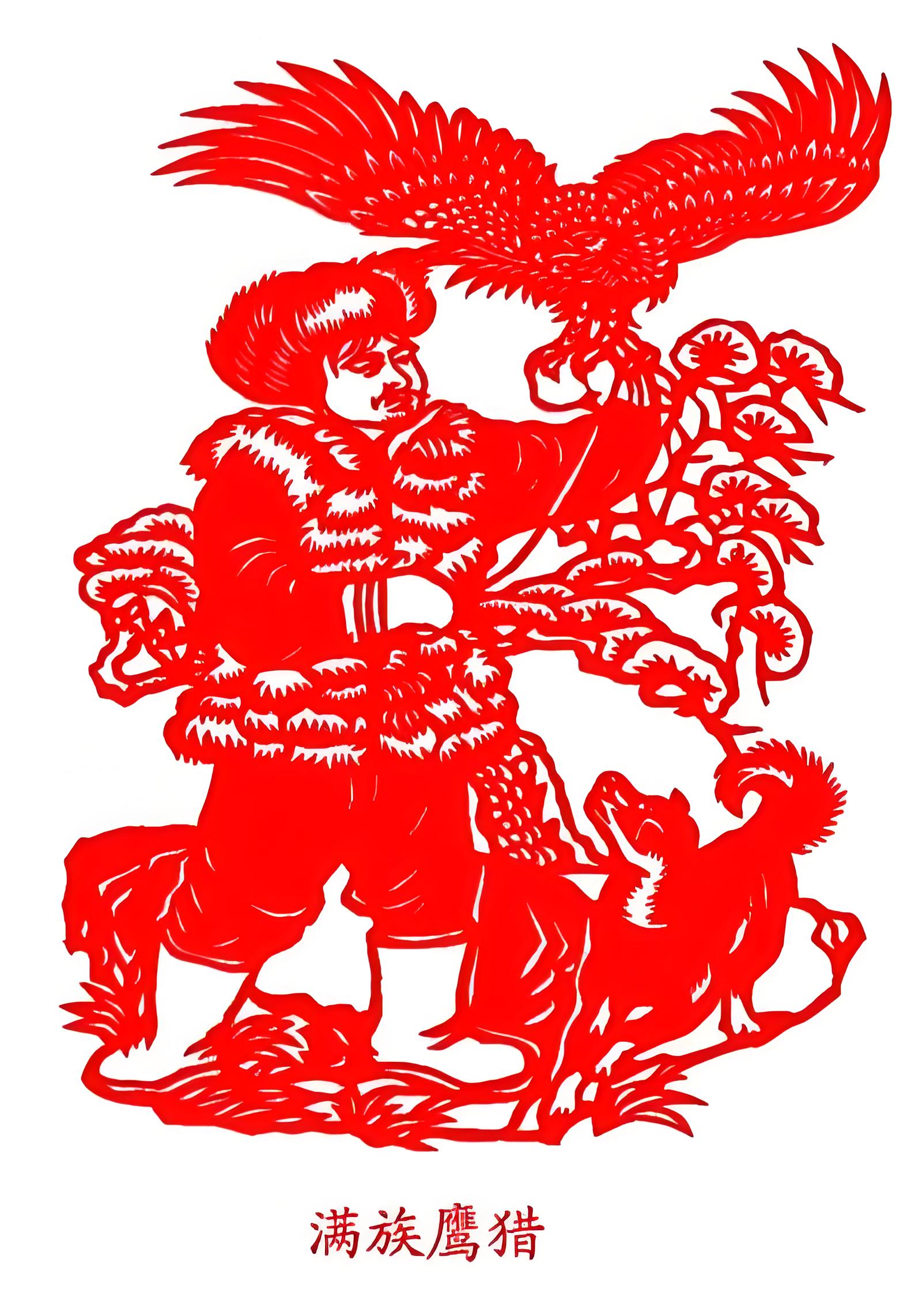
The theme of Paper-Cutting is the life scroll of the Manchu people. From the sacred totems of Shaman sacrifices to the auspicious decorations of festivals; from the fantastic stories of folk legends to the vivid reproduction of rural customs; from the vivid and lovely flowers, birds, insects and grass to the vivid various forms of Manchu characters, the content of Xinbin Manchu Paper-Cutting is all-encompassing, and each work has its unique meaning and story. "Mamaren" is one of the most representative themes. It is a toy for Manchu children to play the "arrange girl doll" game. The Mamaren cut by artists wears a divine crown and cheongsam with a gentle expression, which not only carries the respect for ancestors, but also embodies the expectation for children's healthy growth. Many inheritors once created a 20-meter long scroll, which connects the Manchu Spring Festival customs from the eighth day of the twelfth lunar month to the fifteenth day of the first lunar month with 16 Paper-Cuttings. Scenes such as dog sledding and sacrificing the Kitchen God are lifelike, becoming a "living picture scroll" recording Manchu folk customs.
After hundreds of years of inheritance, Xinbin Manchu Paper-Cutting once faced the dilemma of "lack of successors"——the average age of inheritors who mastered the core techniques once reached 75 years old. Most young people went out to study and work, and this "unprofitable" craft once faced the risk of being forgotten. Fortunately, there are always defenders silently guarding: many provincial inheritors constantly innovate, integrating modern Manchu village style into the theme to make Paper-Cutting close to contemporary life; Inheritors established a Paper-Cutting workshop, delved into folk custom themes, allowing the craft to be passed down from generation to generation; Xinbin Manchu Autonomous County Cultural Center, together with the Vocational Education Center, held a Paper-Cutting exhibition of teachers and students, allowing the younger generation to feel the charm of intangible cultural heritage in creation. The opening of the Xinbin Manchu Paper-Cutting Exhibition Hall in Qingyong Mausoleum also gives more people the opportunity to appreciate the charm of this ancient art up close.
Today, Xinbin Manchu Paper-Cutting has long walked out of the mountains and taken on a new life in the integration of ancient and modern times. The "Paper Reflecting Color" team formed by college students records the deeds of inheritors with cameras, transforms traditional patterns into cultural and creative products such as refrigerator stickers and bookmarks, allowing intangible cultural heritage to enter daily life; the opening of online Paper-Cutting classes allows more people to learn skills from old artists without leaving home; in various cultural and tourism activities, Xinbin Manchu Paper-Cutting has become a bright cultural business card, showing the charm of Chinese intangible cultural heritage and the profound heritage of Manchu culture to the world. It is no longer a cold exhibit in the museum, but a warm and vital art——it is the calluses on the old man's fingers, the herbal fragrance of red paper, the love for life in every cut, and the continuation and inheritance of a nation's cultural context.
A pair of scissors can not cut all the Millennium elegance of the Manchu people; a piece of red paper can not hold all the feelings of the Manchu village. Xinbin Manchu Paper-Cutting carries the profoundness of Shaman culture and the vividness of folk customs, and also embodies the persistence and innovation of craftsmen. It has endured hardships and thrived, moving forward continuously in the tide of the times, not only guarding the cultural root of the nation, but also writing a new chapter in the activation of intangible cultural heritage. May this craft on the fingertips, in the inheritance from generation to generation, always maintain that purity and agility, allowing more people to understand the profoundness and splendor of Manchu culture through the square inch of paper, and let the beauty of Chinese intangible cultural heritage spread to every corner of the world.