Among the treasure house of Chinese folk art, Paper-cutting is one of the most down-to-earth art forms. The carved Paper-cutting of Xiaogan, Hubei Province, stands out for its exquisite knife work and romantic charm of the Chu culture. Emerging from thousands of years of folk life, it engraves people's joy, wishes and cultural beliefs into small pieces of red paper, serving as both a vivid annotation of Jingchu civilization and a lively epitome of Chinese folk wisdom.
1.Historical Origin: Millennium Heritage on the Fertile Land of Jingchu
The history of Xiaogan carved Paper-cutting can be traced back to the Wei, Jin, and Southern and Northern Dynasties, with a development history of more than 1,500 years. The early prototype of Paper-cutting was closely connected with the witchcraft and sacrificial folk customs of the Jingchu area. People cut paper into patterns of deities, birds and beasts for sacrifice and blessing, expressing their awe for heaven, earth and nature. By the Tang and Song dynasties, with the maturity of papermaking technology and the prosperity of folk customs, Paper-cutting gradually entered daily life: people cut paper into flowers as hair ornaments in spring, and carved paper as window decorations during festivals, moving from ritual ceremonies to ordinary civilian life.
The Ming and Qing dynasties marked the heyday of Xiaogan carved Paper-cutting. At that time, Xiaogan enjoyed prosperous commerce and thriving folk crafts. Paper-cutting evolved from simple window decorations and wedding ornaments into more exquisite carved categories, and professional Paper-cutting artists emerged, passing down their skills from generation to generation. The romantic and magnificent aesthetic characteristics of Jingchu culture are deeply integrated into this craft. Different from the bold and unrestrained style of northern Chinese Paper-cutting, Xiaogan carved Paper-cutting embodies the delicacy and elegance of the Chu region, with rich and complex compositions and exquisite flowing lines, gradually forming the unique "E School" Paper-cutting style.
2.Craftsmanship and Aesthetics: Exquisite Art of Knife and Paper
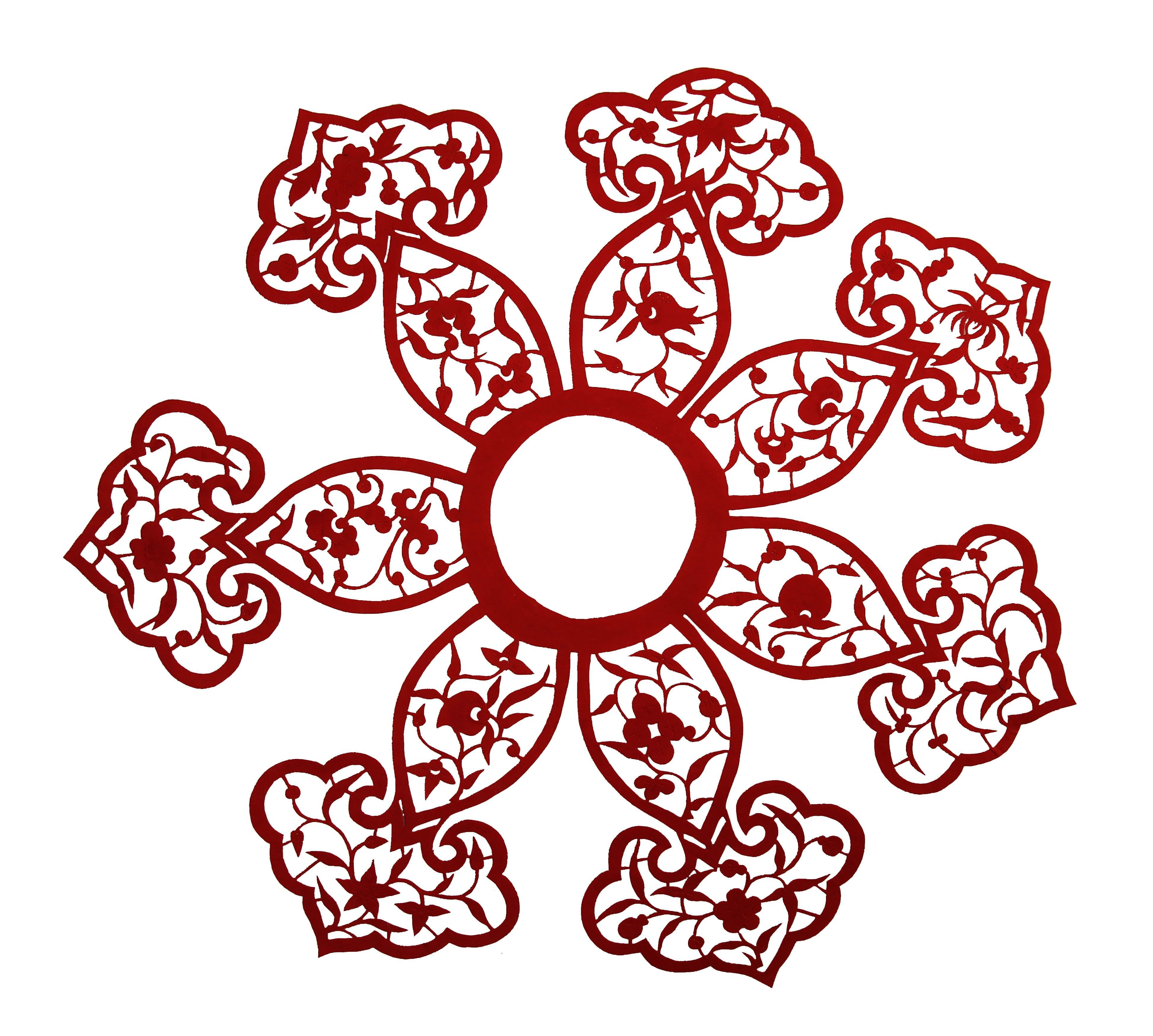
The core feature of Xiaogan carved Paper-cutting is that it uses "carving" instead of "cutting", treating the knife as a brush to create countless scenes on thin paper. A complete carved Paper-cutting work requires multiple procedures including paper selection, pattern tracing, wax plate padding, carving, separating and mounting, each step testing the artist’s skill and patience. Artists usually choose rice paper or lianhi paper with good toughness and light transmittance, fix the drawn pattern on a wax plate mixed with beeswax and beef tallow, and carve along the lines with carving knives of different sizes.
Its technique emphasizes that "intaglio carving shows spirit, while relief carving shows knife skill". Intaglio lines are smooth and crisp, while relief patterns are coherent and complete; more often, the two are combined to create a balance between solid and void. The most exquisite works can reach the realm of "as thin as hair, ingenious in hollowing": the thinnest lines are less than one millimeter, and layers of patterns are exquisitely hollowed out. When viewed against the light, it looks like a transparent brocade woven on paper. In terms of themes, Xiaogan carved Paper-cutting covers everything: flowers and plants, birds and animals, opera characters, myths and legends, each pattern containing unique auspicious meanings.

3.Patterns with Wishes: Auspicious Codes in Folk Life
Rooted in folk life, Xiaogan carved Paper-cutting serves as a carrier for people to express good wishes. Each pattern corresponds to simple and sincere aspirations for life, deeply integrated into festivals and life ceremonies.
In wedding ceremonies, carved Paper-cutting is an indispensable "happiness ornament". In the bride and groom’s wedding room, Paper-cuttings can be seen everywhere on windows, bed curtains and pillows, mostly featuring patterns like dragon and phoenix bringing prosperity, mandarin ducks playing in water, twin lotus flowers and the Chinese character "xi" (happiness), conveying wishes for a harmonious and lasting marriage. During festivals, every family pastes auspicious window Paper-cuttings: peonies symbolize wealth and honor, bats and copper coins imply "blessings before eyes", pomegranates and lotus pods express wishes for many children and good fortune, and carp leaping over the dragon gate implies academic success and career advancement. For elders’ birthdays, descendants present Paper-cuttings with patterns like pine and crane for longevity, and peaches offering birthday wishes, praying for the elders’ health and long life.
As an artistic treasure of the "hometown of filial piety culture", Xiaogan carved Paper-cutting also carries a unique regional cultural core. Many works take stories from the "Twenty-four Paragons of Filial Piety" as themes, such as Dong Yong selling himself to bury his father, Huang Xiang warming the mattress with his body, and Meng Zong crying to make bamboo shoots grow in winter. These works integrate the traditional virtues of filial piety and loyalty into the small red paper, serving as both artistic expression and cultural inheritance. These warm patterns are not just decorations, but also the life philosophy and spiritual beliefs of generations of Chinese people.

4.Inheritance and Innovation: Contemporary Rebirth of an Ancient Craft
In 2008, Xiaogan carved Paper-cutting was included in the National Intangible Cultural Heritage Representative List, bringing new development opportunities to this ancient folk craft. Generations of inheritors uphold craftsmanship, and while retaining the essence of traditional skills, they are also exploring the integration of this ancient art into contemporary life.
Today’s Xiaogan carved Paper-cutting is no longer limited to traditional forms like window decorations and wedding ornaments. Inheritors cooperate with designers to combine classic auspicious patterns with modern life aesthetics, developing diverse forms such as cultural and creative products, home decorations, apparel accessories and digital art, bringing Paper-cutting art into daily life and into the vision of young people. Meanwhile, as a calling card of traditional Chinese culture, Xiaogan carved Paper-cutting has been exhibited abroad many times, stunning audiences with its exquisiteness and charm, and serving as an important carrier for Sino-foreign cultural exchanges.
From sacrificial Paper-cuttings a thousand years ago, to the prosperous folk art in the Ming and Qing dynasties, and to the rebirth of intangible cultural heritage today, Xiaogan carved Paper-cutting has always engraved the marks of the times and people’s wishes on small pieces of red paper. It is a living fossil of Jingchu culture and a crystallization of folk wisdom, continuously blooming with thousand-year vitality through inheritance and innovation.
