In the urban texture of Shanghai, there lies a traditional art that takes paper as the medium and knife as the pen—Shanghai Paper-Cutting. It is derived from the gentle heritage of Jiangnan folk Paper-Cutting, taking root and sprouting in the Haipai soil where Chinese and Western cultures blend. After a hundred years of evolution, it has grown from the original folk decorative patterns into a national intangible cultural heritage with both artistic value and cultural connotation. With a pair of scissors and a piece of colored paper, the tender feelings of Jiangnan water towns, the urban life of Shanghai, and the vivid vitality of traditional Chinese culture in the new era are all cut out between the flipping and moving of fingertips.

Historical Origin: The Integration and Growth of Haipai Paper-Cutting
The development of Shanghai Paper-Cutting has always resonated with the development of the city. In the early 20th century, Paper-Cutting techniques were introduced to Shanghai, initially used as folk decorations such as door notes, shoe flowers and embroidery patterns. In the southern suburbs of Jiangnan such as Fengxian, Paper-Cutting was also deeply bound to folk customs such as sacrifices, weddings and festivals, becoming an indispensable cultural symbol in people's lives. At that time, Paper-Cutting had exquisite knife skills, and the themes were mostly taken from folk legends, classical masterpieces and auspicious patterns, showing the simplicity and vividness of Jiangnan folk art.
With the in-depth integration of Chinese and Western cultures after Shanghai's opening to the outside world and the convergence of northern and southern populations, Shanghai Paper-Cutting began to break geographical limitations, integrating the bold and unrestrained style of northern Paper-Cutting with the delicate and smooth style of southern Paper-Cutting. On the basis of retaining the essence of folk art, it absorbed the light and shadow skills and composition concepts of Western art, and gradually formed a unique "Haipai style". This style not only abandoned the roughness of northern Paper-Cutting, but also got rid of the rigidity of traditional Jiangnan Paper-Cutting. Between hardness and softness, it outlined the artistic expression belonging to Shanghai, and also made Shanghai Paper-Cutting move from the folk to the art palace, becoming an important part of Haipai culture.
Artistic Characteristics: The Haipai Aesthetics of Combining Hardness and Softness
The unique charm of Shanghai Paper-Cutting lies in its distinctive artistic characteristics, which are not only the integration of northern and southern Paper-Cutting techniques, but also the best embodiment of the "inclusiveness" of Haipai culture. Its core can be attributed to the exquisite knife skills, exquisite composition and diverse aesthetics.
- Vivid knife skills, combining hardness and softness: Shanghai Paper-Cuttinghas a variety of techniques such as cutting, carving, tearing and dyeing, using both intaglio and relief carving. The lines are either as thin as silk, outlining the delicate texture of flowers, birds and window lattice; or bold and powerful, depicting the grand pattern of architecture, mountains and rivers. In the traditional paper carving of Fengxian, the knife skills are even more exquisite, with straight and bright lines, which are as fine as a needle passing but without any break, showing the ingenuity of Jiangnan craftsmanship; while Haipai urban Paper-Cuttingintegrates modern design concepts into the knife skills, making the lines more dynamic and rhythmic.
- Exquisite composition, intergrowth of virtual and real: Shanghai Paper-Cuttingpays attention to the balance and blank space of composition, absorbing the concept of "treating blank as black" in Chinese painting and integrating the light and shadow perspective skills of Western art. When expressing urban elements such as Shikumen and alleys, it creates a visual effect of alternating virtual and real through hollowing and overlapping techniques, making the flat Paper-Cuttinghave a three-dimensional sense of hierarchy; when expressing traditional themes such as Jiangnan water towns and auspicious flowers and birds, the composition is full but not crowded, and the blank space is just right, making the picture full of imagination.
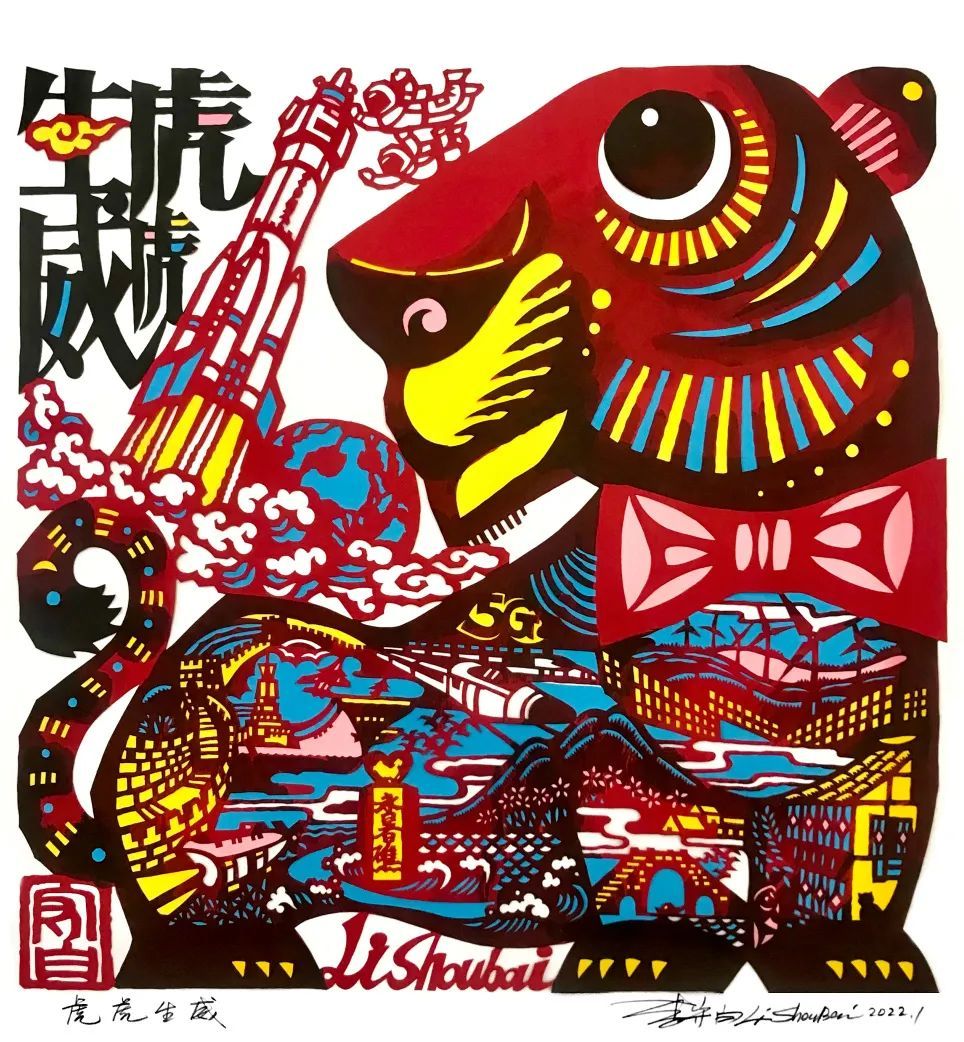
- Diverse aesthetics, integrating Chinese and Western: In terms of color, Shanghai Paper-Cuttingbreaks the limitation of single red in traditional Paper-Cuttingand develops various forms such as colored Paper-Cutting, overprinting cutting and colorful cutting. The collocation of yellow, blue, green, gold and other colors makes the Paper-Cutting works more vivid and lively, implying the colorful life; in terms of aesthetics, it not only retains the simple life atmosphere of folk art, but also integrates the fashion and modern sense of the city, and also absorbs the modern aesthetics of Western art, making the Paper-Cutting art both down-to-earth and having high-level artistic expression.
Classic Patterns: Cultural Connotations and Urban Customs on Paper
The patterns of Shanghai Paper-Cutting are the concrete expression of urban culture and folk emotions. Behind each pattern, there are people's beautiful expectations for life and the urban memory of Shanghai. Its pattern themes are mainly divided into two categories: one is the traditional auspicious patterns inherited from Jiangnan, and the other is the urban characteristic patterns unique to Shanghai. The two types of patterns blend with each other, forming the unique connotation of Shanghai Paper-Cutting.
Traditional auspicious patterns are the foundation of Shanghai Paper-Cutting, taken from folk customs and traditional Chinese culture, covering many contents such as flowers, birds, fish and insects, auspicious animals and birds, and auspicious symbols. Flower patterns such as peony, lotus and plum blossom imply prosperity and harmony; auspicious animal patterns such as bat, red-crowned crane, dragon and phoenix symbolize happiness, longevity and health, and prosperity of dragon and phoenix; symbol patterns such as double happiness, eight auspiciousness and ruyi are often used in weddings, birthdays, festivals and other scenes, conveying people's simple yearning for a better life. In Shanghai Paper-Cutting, these patterns are endowed with more delicate expression, the exquisite knife skills make the patterns more lifelike, and the rich colors make the implied meaning more vivid.
Urban characteristic patterns are the innovative expression of Shanghai Paper-Cutting and the unique mark of Haipai culture. With Shikumen, alleys, Yu Garden, Shanghai urban skyline as the core, the urban life and urban development of Shanghai are frozen on paper. The carved doors and windows of Shikumen, the mottled walls of alleys, and the pavilions of Yu Garden are accurately restored in the hollow lines of Paper-Cutting, showing the old style of Shanghai; while modern urban elements such as the skyscrapers of Lujiazui, the ferry of the Huangpu River, and the academy of Xujiahui make Shanghai Paper-Cutting keep up with the pace of urban development and become a "cultural diary" recording the changes of Shanghai city. These urban patterns make Shanghai Paper-Cutting get rid of the theme limitation of traditional Paper-Cutting and become a unique urban cultural symbol of Shanghai.
Modern Renaissance: Adherence to Tradition and Innovation of Intangible Heritage Skills
As a national intangible cultural heritage, Shanghai Paper-Cutting has never stayed on the traditional paper, but is constantly rejuvenating in adherence to tradition and innovation. In the new era, the inheritors of Shanghai Paper-Cutting uphold the concept that "tradition is not a burden, but the foundation of innovation". On the basis of adhering to the core skills, they constantly explore the cross-border integration and life-oriented expression of Paper-Cutting art, making this century-old skill go out of the paper, integrate into modern life, and become a vivid carrier of Shanghai's cultural innovation.
- Technological innovation, breaking the flat limitation: On the basis of traditional cutting and carving techniques, Shanghai Paper-Cuttinghas created a three-dimensional light and shadow Paper-Cuttingtechnique. Through overlapping, hollowing, overprinting and other techniques, the flat Paper-Cutting has a three-dimensional light and shadow effect, standing on the paper like a relief, making the works more artistically appealing. At the same time, Paper-Cutting is also combined with other intangible heritage skills such as Shanghai embroidery. Paper-Cutting outlines the outline and embroidery fills in the details. The collision of the two traditional skills makes the works present a richer artistic level.
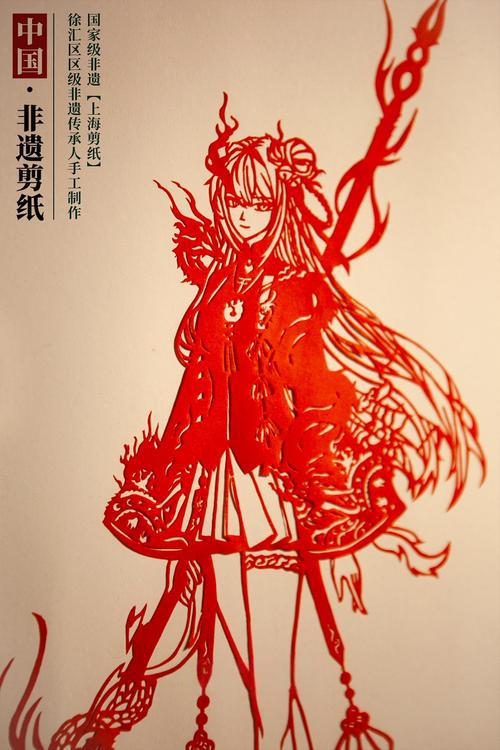
- Thematic innovation, keeping up with the trend of the times: The themes of Shanghai Paper-Cuttingare constantly expanding, from traditional folk auspiciousness and urban customs to many fields such as ACG game IP, anime characters, modern urban new appearance and new social groups. The integration of Paper-Cuttingart and ACG culture makes young people feel the charm of intangible heritage; Paper-Cutting works with the themes of urban development and times changes make Paper-Cutting an art form recording the times, making the century-old skill resonate with the new era.
- Life-oriented expression, integrating into daily scenes: Shanghai Paper-Cuttingis no longer just an art work in the exhibition hall, but has entered people's daily life. Paper-Cuttingelements are integrated into cultural and creative products such as desk lamps, gift boxes and commemorative stamp albums. The light passes through the hollow lines of Paper-Cutting, creating a warm living atmosphere; Paper-Cutting window grilles and Paper-Cutting decorative paintings have become new choices for home decoration, making intangible heritage art embellish daily life; Paper-Cutting experience courses enter campuses, communities and cultural and creative parks, allowing more people to experience the fun of Paper-Cutting by hand and sow the seeds of intangible heritage inheritance.
- Cross-border integration, building cultural IP: Shanghai Paper-Cuttingis also deeply integrated with cultural tourism, commerce, art and other fields. In folk scenes such as Yu Garden Lantern Festival, the hollow lines of Paper-Cuttingare combined with light and technology to create an immersive visual feast; cross-border cooperation with game, anime and other IP makes Paper-Cutting art have a younger audience and also makes intangible heritage culture have a market-oriented development path; in international cultural exchanges, Shanghai Paper-Cutting, as a representative of Haipai culture, goes abroad and shows the unique charm of traditional Chinese culture to the world.
Over a hundred years, Shanghai Paper-Cutting has grown from a paper pattern in the Jiangnan folk to a classic symbol of Haipai culture. It is not only a skill of fingertips, but also a microcosm of Shanghai's urban culture, and the best embodiment of the inclusiveness and immortality of traditional Chinese culture. A pair of scissors cannot cut off the thousand-year cultural inheritance; a piece of colored paper carries the cultural self-confidence of the new era. In the balance of adhering to tradition and innovation, Shanghai Paper-Cutting is showing a more dazzling light on paper with a brand-new attitude, making the ingenuity of Haipai intangible heritage immortal and passed down from generation to generation in the new era.