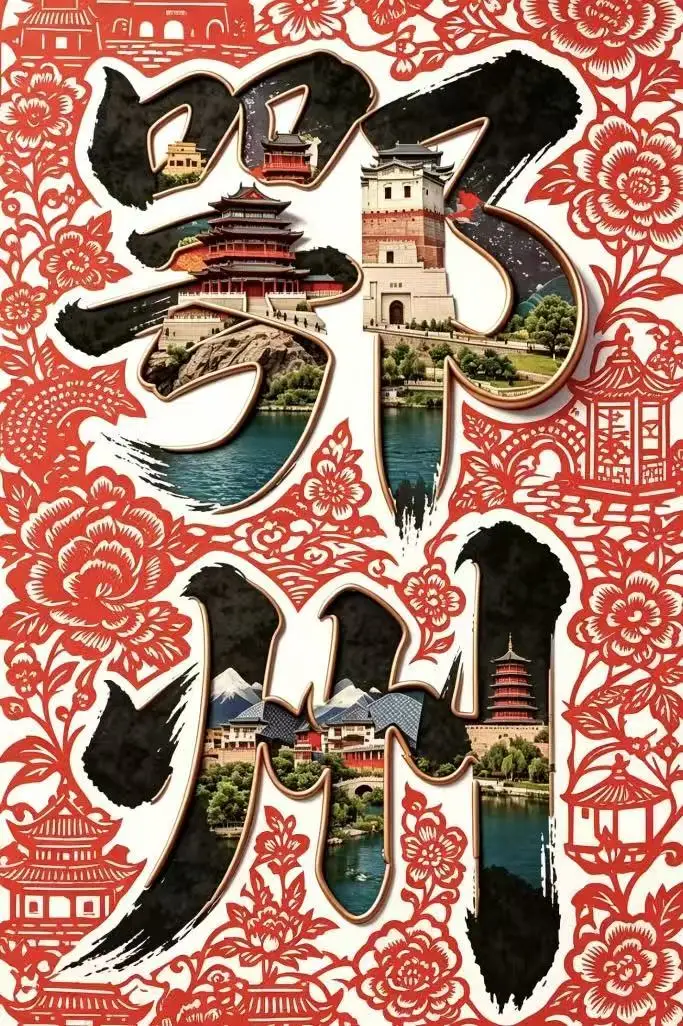
In the long history of Chinese paper-cut art, Ezhou carved paper-cutting stands as an intangible heritage treasure with distinctive Jingchu characteristics. Unlike ordinary scissor-cut paper works, this craft uses carving knives to create thousands of delicate patterns on stacked colored paper. It holds ordinary people’s simple wishes for a better life and embodies the profound heritage of thousand-year regional culture. As a national intangible cultural heritage, it has stepped from ancient window lattices, wedding halls and dowry boxes into the modern world, always telling the romance and craftsmanship of Oriental folk art with vivid vitality.
1.Carving with Knives: The Unique Paper-cutting Craftsmanship
The core feature of Ezhou carved paper-cutting is "carving" rather than "cutting". Traditional scissor paper-cutting can only make one or two pieces at a time, while Ezhou carved paper-cutting uses special carving knives with a wax plate made of beeswax and plant ash to fix paper, allowing dozens of layers of colored paper to be carved at the same time. This not only ensures high consistency of patterns, but also enables extremely fine lines.
Craftsmen hold the knife steadily and cut precisely, flexibly using two techniques: positive engraving and negative engraving. Positive engraving retains the pattern outline with continuous smooth lines, showing the vivid charm of the design; negative engraving removes the main body of the pattern, conveying artistic conception through blank space, creating unique beauty between virtual and real. With the combination of the two, flowers, birds, fish, insects, figures and pavilions all come alive on paper. Even hair-thin lines are clear and neat without burrs or breaks.
Besides its unique craftsmanship, Ezhou carved paper-cutting has a rich variety of categories, deeply embedded in all aspects of traditional life: window grilles, pillow patterns, shoe patterns, wedding paper-cuts, lantern patterns... Each category corresponds to a specific life scene and is an indispensable visual symbol in folk rituals.
2.Patterns with Meanings: Auspicious Codes in Daily Life
If exquisite knife work is the skeleton of Ezhou carved paper-cutting, the auspicious meanings hidden in the patterns are the soul that has kept it alive for thousands of years. People in the Jingchu region have folded all their good expectations for life into these thin pieces of paper, and each pattern corresponds to a simple and sincere blessing.
Auspicious flowers are the most common theme: peonies symbolize prosperity and perfection, lotuses represent integrity and fertility, plum blossoms signify unyielding spirit and new year blessings, and chrysanthemums convey wishes for longevity and health. Craftsmen often combine multiple flowers in one design. For example, "Phoenix Through Peony" implies glory, wealth and good fortune; "Year After Year of Abundance" paired with fish patterns prays for yearly prosperity and a well-off life.
Besides flowers, auspicious animals and figure patterns also carry rich folk connotations. Classic patterns like dragon and phoenix harmony, magpies on plum branches, and kylin delivering a son are widely used in weddings and birthday banquets. Patterns of historical legends such as the Eight Immortals and the Twenty-four Filial Exemplars convey traditional ethics and values while serving as decoration. Even simple geometric meander patterns imply the wish for continuous and everlasting good fortune.
These patterns are never separated from daily life. During the Spring Festival, window grilles are pasted to welcome the new year; at weddings, wedding paper-cuts bless the couple; for elders’ birthdays, pine and crane patterns are given as gifts; for babies’ one-month celebration, tiger-pattern paper-cuts pray for safety. Ezhou carved paper-cutting is never an antique in exhibition halls, but a warm companion in generations of lives, carrying happy memories of thousands of families.

3.Passing on the Torch: Contemporary Renewal of the Intangible Craft
The history of Ezhou carved paper-cutting can be traced back to the Wei and Jin Dynasties. It developed through the Tang and Song Dynasties and flourished in the Ming and Qing Dynasties, taking deep root in the folk culture of Ezhou and its surrounding areas. In modern times, with changes in lifestyle, this once widespread craft once faced the dilemma of a shrinking number of inheritors. In 2008, Ezhou carved paper-cutting was included in the National Intangible Cultural Heritage Representative List, bringing new development opportunities to this ancient craft.
Today, Ezhou carved paper-cutting not only adheres to traditional craftsmanship, but also actively adapts to the contemporary context. Intangible heritage inheritors enter campuses to offer public welfare courses, allowing children to get in touch with carving skills from an early age and planting the seeds of cultural inheritance.
Emerging designers extract and reconstruct traditional patterns, integrating them into cultural and creative products, clothing design and home decoration, bringing old crafts into young people’s daily lives. Metal bookmarks, art prints, co-branded jewelry, brand packaging... More and more carriers have freed carved paper-cutting from the single image of "window grille", presenting it to the public in more diverse forms.
At the same time, Ezhou carved paper-cutting has also become a beautiful calling card for China’s cultural exchanges with the world. The delicate and exquisite Oriental patterns have gone abroad repeatedly, amazing the world in international art exhibitions and telling the romance and depth of Chinese folk art to overseas audiences. It is no longer just a local craft of the Jingchu region, but also a cultural symbol representing Chinese craftsmanship, blooming with unique Oriental charm from a global perspective.

For thousands of years, the carving knife has never stopped. Ezhou carved paper-cutting comes from the daily life of ordinary people, carrying their simplest wishes for happiness and the most delicate aesthetic expression of Oriental art. It is a folk history carved on paper, as well as a living cultural root in the present. In the two-way journey of inheritance and innovation, this ancient craft always maintains vivid vitality, continuing the cultural legend of Jingchu and China in every delicate line.