On the Loess Plateau in northern Guanzhong, Shaanxi, Xunyi color Paper-Cutting blooms like a vibrant artistic flower in the countryside. With a history of over 2,000 years, it grew out of ordinary people's daily lives and has become a cultural symbol carrying agricultural civilization memories and folk aesthetic beliefs. Breaking through the monochrome limitation of traditional Paper-Cutting, it depicts local people's yearning for a better life with bright colors, rich composition and vivid folk culture, forging a unique aesthetic style in Chinese folk art history.
1.Millennium Evolution: From Monochrome Paper-Cutting to Color Collage Art
With roots tracing back to the ancient Bin region in the Han Dynasty, Xunyi Paper-Cutting developed gradually along with agricultural civilization and completed its key transformation from monochrome to color collage in the late Qing Dynasty, becoming the most representative local folk art form.
Origins in the Han Dynasty and Rooted in Folk Customs
As early as the Han Dynasty, the prototype of Paper-Cutting emerged in Xunyi, initially closely tied to folk activities like sacrifice and blessing. Through the Tang, Song, Yuan and Ming dynasties, it gradually integrated into all aspects of daily life, becoming an essential skill for local women and a staple decoration for festivals, weddings, funerals and new house ceremonies.
Birth of Color Collage Technique in the Late Qing Dynasty
In the late Qing Dynasty, local folk artists innovated on the basis of monochrome Paper-Cutting. They experimented with collaging Paper-Cutting pieces of different colors and using backing paper to enhance layering, finally giving birth to color Paper-Cutting. The addition of colors greatly boosted expressive force, making it quickly replace monochrome Paper-Cutting as the mainstream and spread widely across Xunyi.

2.Exquisite Craftsmanship: Artistic Expression of Cutting, Pasting and Mounting
Using colored glossy paper as core material, Xunyi color Paper-Cutting constructs images through three key processes — cutting, pasting and mounting. It combines superb handicraft with unique aesthetic wisdom, presenting a style of "dense but not chaotic, gorgeous but not tacky".
Shaping by Cutting: Exaggerated and Vivid Form Language
"Cutting" is the foundation of color Paper-Cutting. Artists work with scissors without drafts, cutting all patterns by hand based on experience and imagination. Works feature exaggerated, romantic shapes — stretched figures, naive vivid animals, and full lush flowers with smooth, powerful lines, retaining the simplicity of folk art while brimming with unrestrained imagination.
Coloring by Pasting: Rich and Full Color Aesthetics
"Pasting" is the soul of color Paper-Cutting. Artists layer pieces cut from red, yellow, green, purple and black paper, creating strong yet harmonious color contrast. The composition is full and dense with intricate patterns and prominent subjects, radiating the vivid vitality of rural art amid striking visual impact.
Layering by Mounting: Rich Three-Dimensional Effect
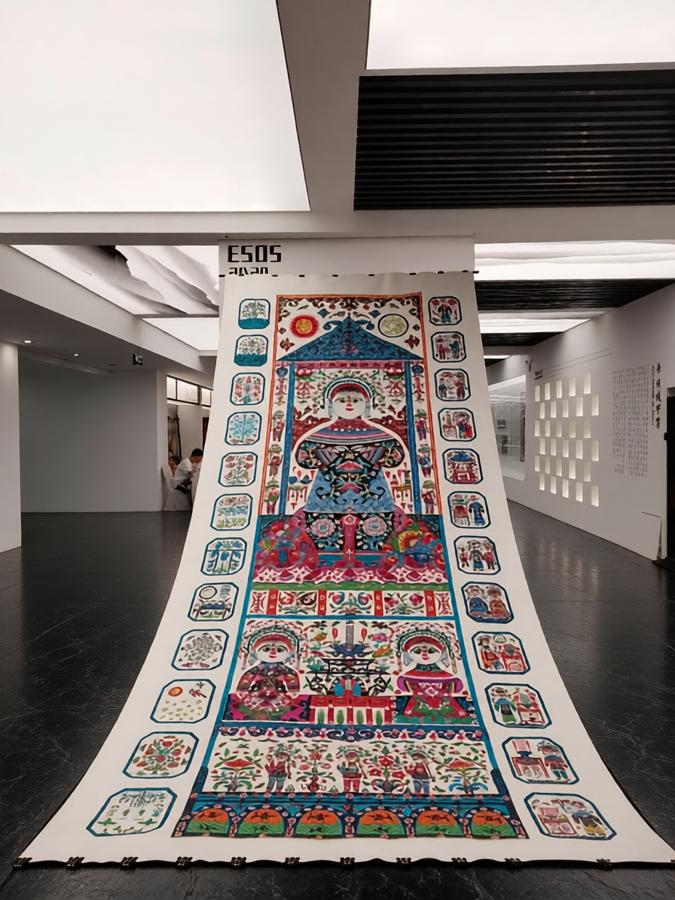
"Mounting" is key to enhancing texture. By laying colored backing paper under collage patterns, it strengthens depth and dimension. Xunyi color Paper-Cutting comes in flexible sizes: tiny window grilles are exquisitely delicate, while giant works of several meters are magnificent — the largest can exceed 4 meters, demonstrating remarkable artistic tension.、
Combination of Cutting and Singing: Folk Feature of Sound-Picture Integration
A unique trait of Xunyi color Paper-Cutting is that artists chant local ballads while creating. Each work corresponds to exclusive ballad content covering opera stories, myths and daily scenes, deeply integrating visual art with oral literature and endowing works with richer cultural connotations.

3.Cultural Roots: Auspicious Beliefs and Spiritual Sustenance in Rural Life
Xunyi color Paper-Cutting is never mere decorative art — it is a tangible carrier of the spiritual world of people on the Loess Plateau. Every pattern and every hue holds simple beliefs and good wishes, deeply embedded in all dimensions of folk life.
Auspicious Patterns: Simple Wishes for a Better Life
Themes of color Paper-Cutting center on auspicious meanings. Fish among lotuses symbolize annual surplus and well-being; frog patterns imply many children and family prosperity; peonies represent wealth and glory; and auspicious beasts like tigers and lions ward off evil and protect the home, conveying the simplest pursuit of happiness in agricultural society.
Belief Carrier: Cultural Function in Folk Rituals
In Xunyi, color Paper-Cutting is inseparable from traditional rituals such as soul-calling, healing, house blessing and rain-praying, serving as a vital token between humans and the divine. Patterns used in different rituals have specific forms and meanings, carrying people's aspirations for disaster relief and favorable weather, and form an important part of the local belief system.
Classic Image: The Spiritual Symbol of the Paper-Cutting Lady
The iconic "Paper-Cutting Lady" is the cultural emblem of Xunyi color Paper-Cutting. With a round face and bright eyes, she wears a phoenix crown and iridescent robes, sitting serenely on a lotus platform. She embodies both divine holiness and folk women's pursuit of beauty, dignity and self-worth, serving as a vivid portrait of rural women's inner world.
4.Inheritance and Revival: The Living Charm of Intangible Heritage Going Global
As a national intangible cultural heritage, Xunyi color Paper-Cutting keeps innovating through generations. It has traveled from rural cave dwellings on the Loess Plateau to national stages, and even across oceans to the global art scene, demonstrating the powerful vitality of living intangible heritage.
Master's Legacy: Artistic Pioneering by Ku Shulan
Known as the "Picasso of China", folk arts master Ku Shulan is the culminating figure of Xunyi color Paper-Cutting. She learned the craft in childhood, created the original color Paper-Cutting painting style based on tradition, and wove personal life experience into her works, forging a one-of-a-kind artistic voice. Named "Folk Arts and Crafts Master" by UNESCO, her works have been exhibited in dozens of countries, introducing the artistic value of Xunyi color Paper-Cutting to the world.
ICH Protection: Systematic Inheritance Framework
Today, Xunyi color Paper-Cutting has a complete intangible cultural heritage protection system. Local authorities promote intergenerational transmission by accrediting inheritors at all levels, offering school courses and building ICH exhibition halls. A growing number of young people have joined the inheritance team, injecting fresh vitality into the ancient folk art.
Revitalization and Innovation: Diverse Modern Expressions
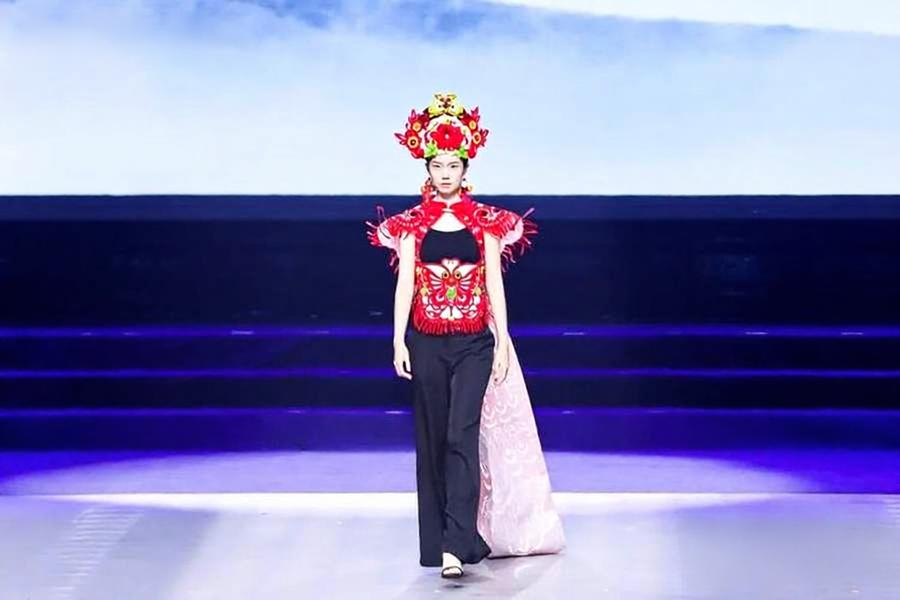
In recent years, Xunyi color Paper-Cutting has expanded beyond traditional scenarios, extending from window grilles and wall art to creative fashion, cultural products, spatial decoration and more. New forms like runway shows and cross-border art exhibitions keep emerging, blending ancient Paper-Cutting art with modern aesthetics and radiating new brilliance in the contemporary era.
For over 2,000 years, Xunyi color Paper-Cutting has grown out of the everyday life of the Loess Plateau. With scissors as brush and colored paper as ink, it depicts the full spectrum of rural Chinese life and embodies the good wishes of ordinary people. It is more than an ancient folk craft — it is a living epic of agricultural civilization, carrying the aesthetic genes and cultural memory of the Chinese nation. Today, this colorful intangible heritage treasure crosses mountains and seas, continuing to bloom through inheritance and innovation, and telling artistic stories from China's Loess Plateau to the world.