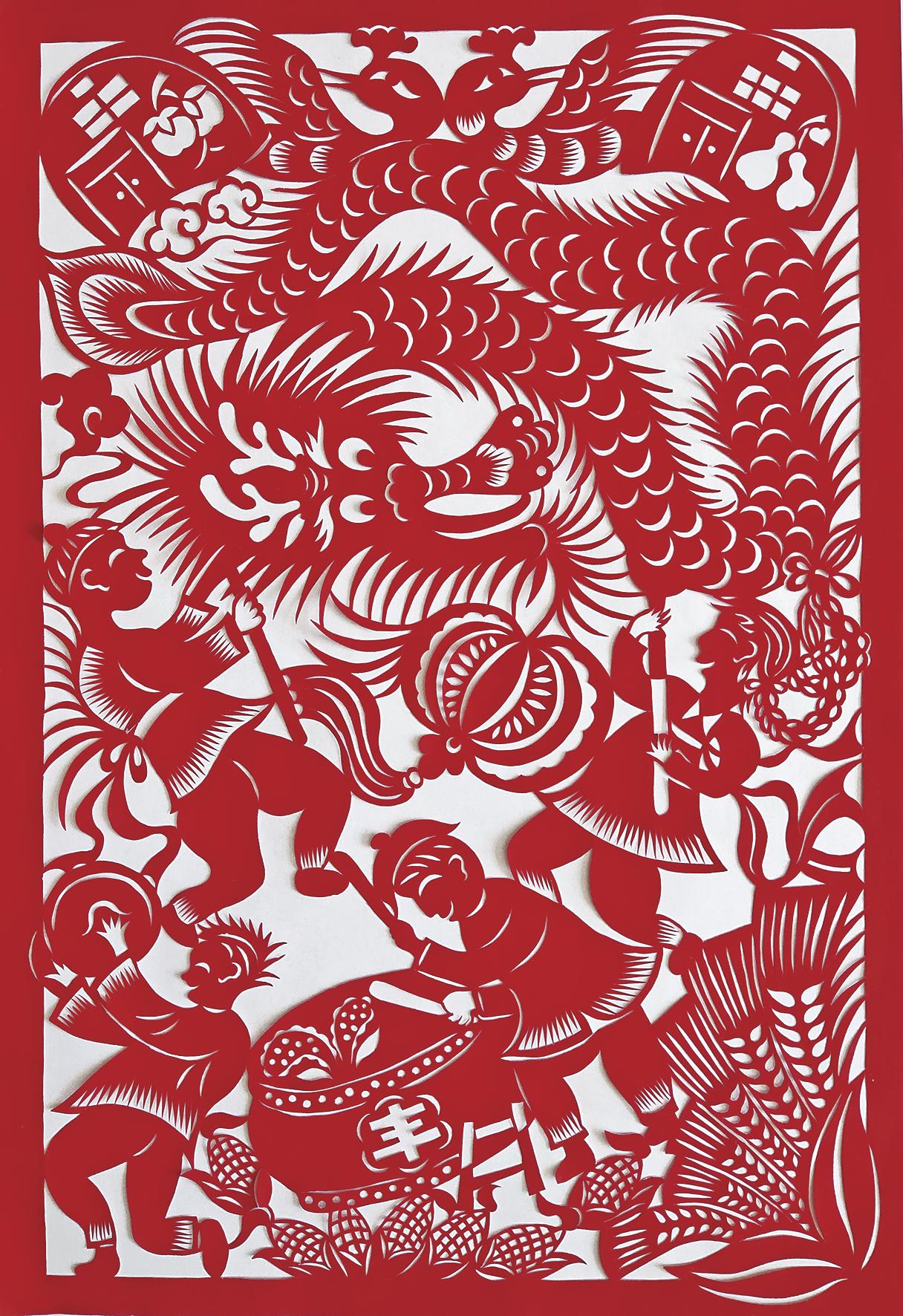
In the heart of the vast Loess Plateau, a thousand-year-old folk craft has been passed down in Qingyang, Gansu Province — Qingyang Paper-Cutting. It is more than patterns created by scissors and red paper; it is a living culture rooted in agricultural civilization, recording the seasonal festivals, life rituals and spiritual aspirations of the local land. From festive window decorations on farmhouses to symbolic patterns in folk ceremonies, Qingyang Paper-Cutting has always been closely intertwined with local life, making it a highly regional art form in Chinese folk fine arts.
1.Historical Origin: From Ancient Totems to Folk Customs
The development of Qingyang Paper-Cutting is deeply bound to the civilization process of the Loess Plateau. Its origin can be traced back to prehistoric times, and it has evolved over thousands of years to finally integrate into folk daily life:
- Ancient Origin and Belief Foundation: Located in the birthplace of Chinese agricultural civilization, Qingyang saw geometric and animal patterns on Neolithic painted pottery that already took the embryonic form of paper-cut shapes. Primitive ancestors carved images of deities, animals and plants into symbols to pray for blessings and ward off disasters. This simple witchcraft worship and life belief became the earliest spiritual core of paper-cut art.
- Dynastic Development and Folk Popularization: After the birth of papermaking in the Han Dynasty, people began to cut patterns on paper, gold foil and silk for sacrifice and decoration, forming the initial practical function of paper-cutting. During the Tang and Song dynasties, festival paper-cut customs such as window flowers and door decorations gradually spread. By the Ming and Qing dynasties, Qingyang Paper-Cutting reached its peak, with skilled craftsmen in every village and cutting practices in every household, thoroughly integrating into the fabric of ordinary people’s lives.
2.Artistic Features: The Bold Aesthetics of the Loess Character
Qingyang Paper-Cutting has a distinct northern regional style. Different from the delicate and exquisite paper-cutting in southern China, it has formed a unique aesthetic system:
- Modeling Style and Aesthetic Traits: The overall style is bold, simple and generous, with concise and vigorous lines and a full, compact composition. Creators do not pursue realistic restoration, but highlight the core charm of things through exaggerated and deformed techniques, full of primitive vitality and tension, fully showing the heroic temperament nurtured by the Loess Plateau.
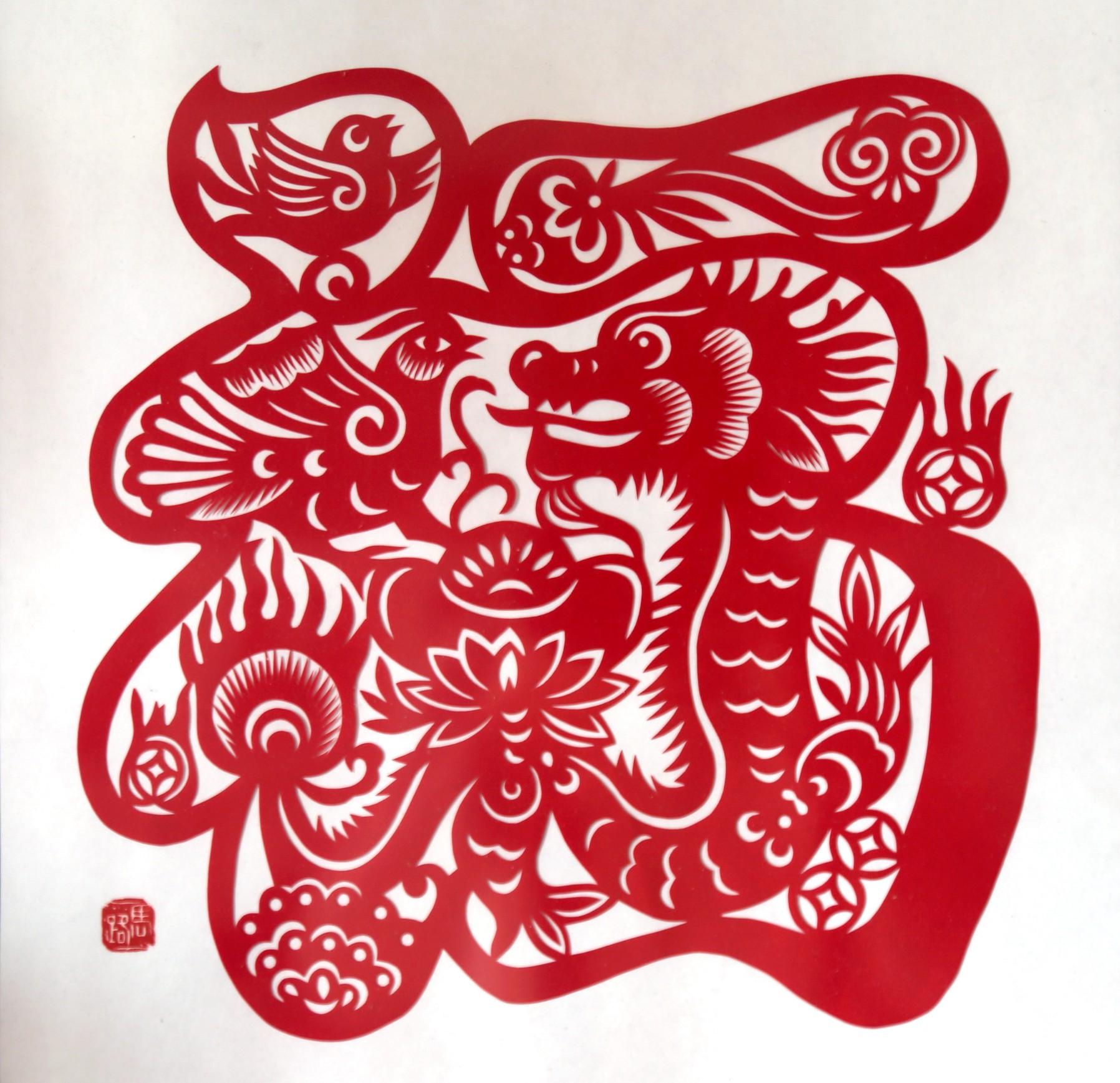
- Theme System and Auspicious Meanings: Themes cover a wide range of categories including flowers, birds, fish, insects, myths, opera stories and daily life, with a core focus on life worship and auspicious blessings. The Bun Doll and fish-among-lotus patterns express wishes for reproduction; peonies, pomegranates and bats correspond to wealth, many children and good fortune; auspicious animals such as tigers and lions serve to guard the home and ward off evil. Each pattern carries specific folk expectations.
- Technique and Color Expression: In terms of technique, it mainly adopts positive cutting with supplementary negative cutting, with smooth and powerful cuts. In terms of color, it mostly uses pure bright red, which not only fits the festive aesthetics of Chinese folk culture, but also forms a sharp echo with the profound natural environment of the Loess Plateau, with strong visual impact and a vivid, down-to-earth vibe.
3.Folk Application: Integrated into Seasonal Festivals and Life Rituals
Qingyang Paper-Cutting is a living life aesthetics, deeply embedded in the seasonal festivals, life rituals and belief systems of local people, undertaking different cultural functions in different scenarios:
- Decoration Carrier for Seasonal Festivals: The Spring Festival is the most concentrated application scenario of Qingyang Paper-Cutting. Every household pastes window flowers, wall flowers and door decorations. Bright red patterns decorate wooden lattice windows, not only enhancing the festive atmosphere, but also embodying the simple wish of bidding farewell to the old year and praying for a good harvest. In addition, festivals such as the Lantern Festival and Dragon Boat Festival also have corresponding paper-cut patterns, echoing different festival connotations.
- Emotional Symbol of Life Rituals: In wedding ceremonies, windows, ceilings and dowries in the bridal chamber are covered with wedding paper-cuts, with combinations of mandarin ducks, peonies and the happiness character blessing the newlyweds. For birthday celebrations, paper-cuts with pine cranes, peaches and longevity patterns carry wishes for health and longevity. In funeral sacrifices, paper-cutting is also used as a funeral supply to express remembrance, running through the complete life course of local people.
- Functional Expression of Folk Beliefs: In traditional folk beliefs, paper-cutting also serves the function of praying for blessings and dispelling disasters. When encountering epidemics or natural disasters, people will cut patterns such as "Sky-Sweeping Grandma" and "Hand-in-Hand Dolls", and paste or burn them to pray for evil removal and family safety, becoming a visual carrier of folk beliefs.
4.Inheritance and Renewal: The Contemporary Path of Intangible Heritage
As a national intangible cultural heritage, Qingyang Paper-Cutting constantly explores the balance between inheritance and innovation in contemporary society, continuing the vitality of ancient skills:
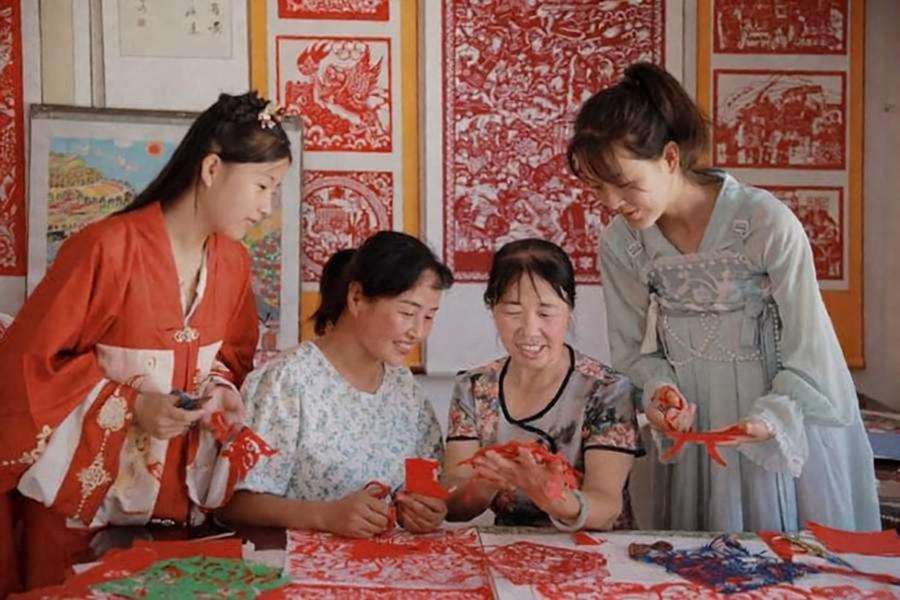
- Intangible Heritage Protection and Living Inheritance: In the past, Qingyang Paper-Cutting was passed down from generation to generation by rural women through oral instruction and personal demonstration. Today, the local government has built a diversified inheritance system by establishing intangible heritage workshops, recognizing representative inheritors, and promoting paper-cutting into campuses and classrooms, guarding the cultural root of this craft.
- Contemporary Innovation and International Communication: More and more inheritors are breaking through traditional boundaries, combining paper-cut patterns with cultural and creative products, home decoration and fashion design. They have developed derivative products such as bookmarks, silk scarves, tea sets and lighting fixtures, integrating ancient art into modern life. Meanwhile, Qingyang Paper-Cutting also frequently appears in international cultural exchange activities, conveying the unique charm of Chinese folk art to the world.
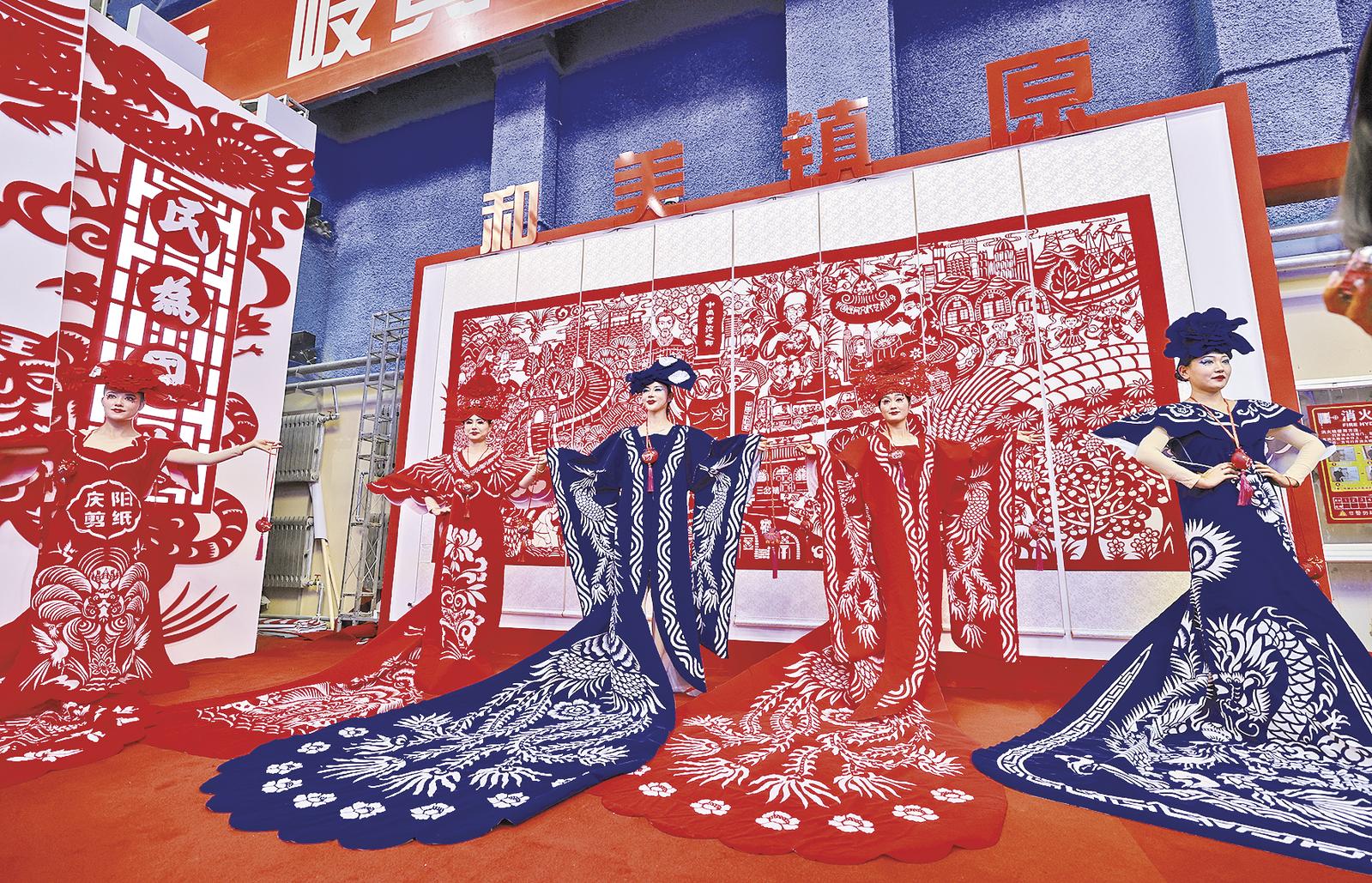
Thousands of years have passed, and Qingyang Paper-Cutting has always thrived on the land of the Loess Plateau. It comes from ancient beliefs, settles in folk life, and continues in contemporary innovation. Every cut hides Chinese people’s love for life and longing for beauty. This ancient folk art is not only a vivid witness of regional culture, but also an indispensable warm chapter in the context of Chinese civilization.