In Chinese folk art, Pujiang Paper-Cutting stands out as a unique treasure rooted in the Jiangnan region, with a history of more than a thousand years. It is not only a skill of cutting paper with scissors and knives, but also a carrier of Jiangnan's cultural temperament and people's beautiful aspirations. Listed in the National Intangible Cultural Heritage Representative List in 2008 and the Human Intangible Cultural Heritage Representative List by UNESCO in 2010, Pujiang Paper-Cutting has gone from the folk lanes of Pujiang to the world stage, interpreting the eternal charm of traditional Chinese art with its delicate lines and rich connotations.
Millennial Glory: From Rural Sprout to Human Intangible Cultural Heritage
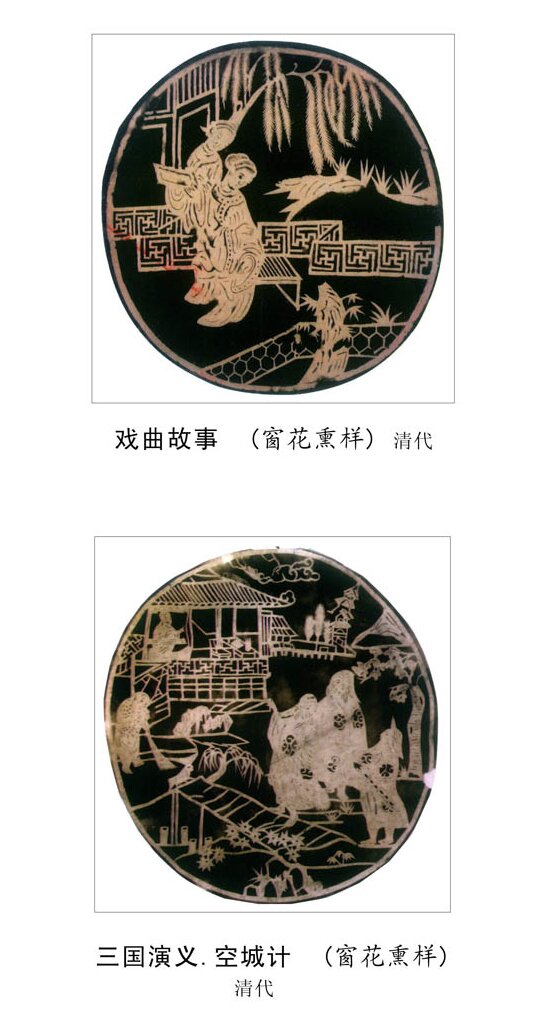
The history of Pujiang Paper-Cutting can be traced back to the Tang and Five Dynasties, and there are clear literary records in the Yuan and Ming dynasties, which fully proves its long-standing folk inheritance. By the Ming and Qing dynasties, this art had been deeply rooted in the local area, and the prosperity of Pujiang Luantan, a local opera, injected new vitality into it, making opera characters an important creative theme of Pujiang Paper-Cutting and forming a unique artistic style with strong regional characteristics.
In 1993, Pujiang County was named the "Hometown of Chinese Folk (Paper-Cutting) Art" by the Ministry of Culture, which is the official recognition of its important position in Chinese Paper-Cutting. And being included in the human intangible cultural heritage list is a testament to its outstanding universal value in the field of world folk art.
Exquisite Craftsmanship: The Artistic Essence of Pujiang Paper-Cutting
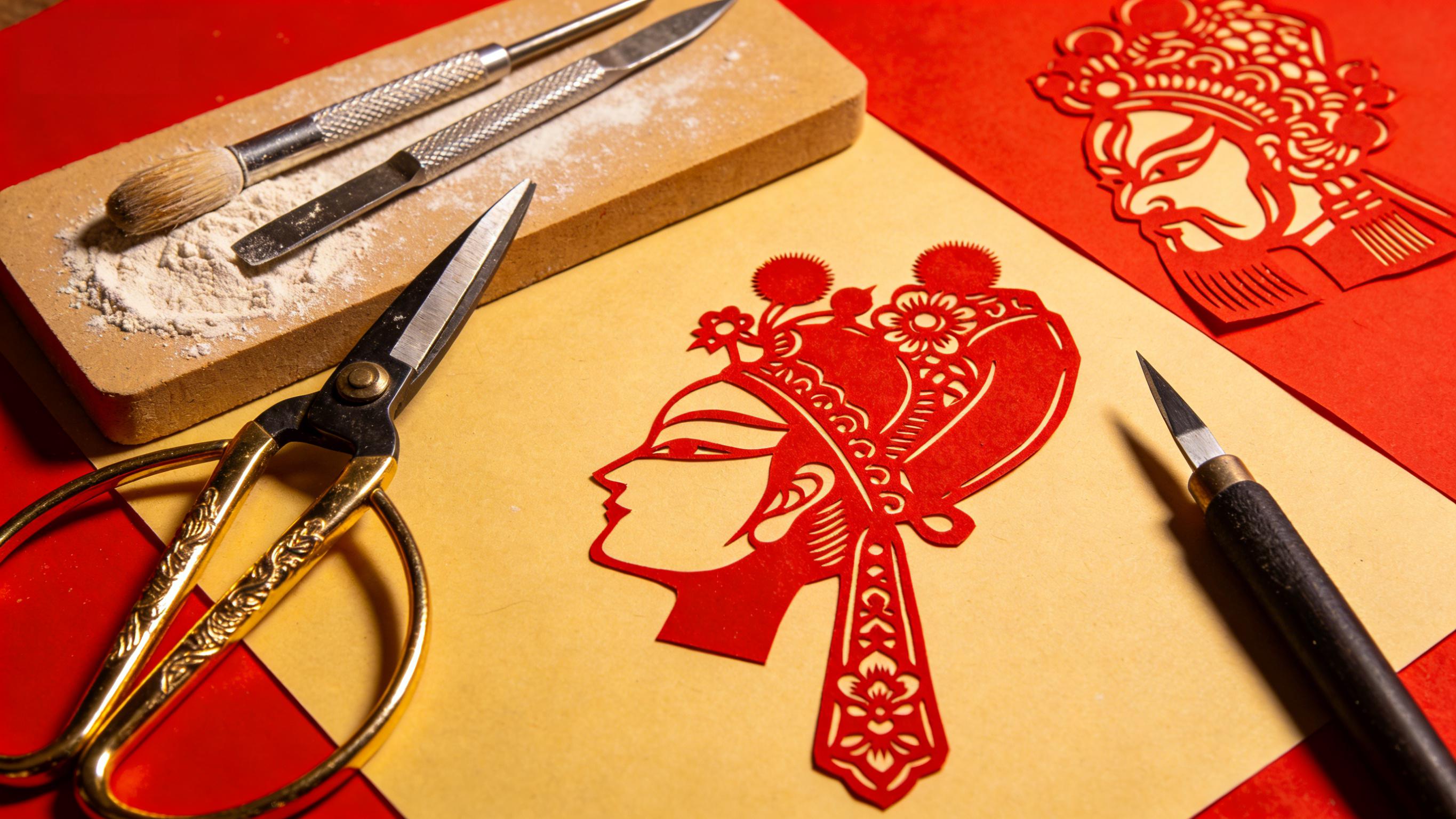
Pujiang Paper-Cutting has a unique artistic style that can be summarized in twenty words: "fresh and beautiful, exquisite and soft, rich in connotation, vivid in image and unique in composition". Its craftsmanship is diverse and delicate, combining negative cutting and positive carving, folding and color lining skillfully, which makes the works have a strong three-dimensional sense and decorative effect even on a single piece of red paper.
- Diverse Craft Techniques: Most of the traditional works are cut with scissors, and a small number are carved with knives. Artists stack 5-10 pieces of dyed local paper, fix them with cotton paper, and cut them from the inside out in order, with neat and smooth lines. The smoked sample inheritance method of using pine branches or oil lamps to smoke the manuscript makes the classic patterns pass on from generation to generation.
- Rich Thematic Content: Its themes cover all aspects of Jiangnan life, among which opera characters are the most distinctive, taking materials from local operas such as Pujiang Luantan and Wu Opera, with vivid character expressions and rich background scenes. In addition, there are flowers, birds, insects, fish, landscapes, auspicious beasts and folk customs, all of which are vivid and vivid.
- Distinctive Color and Composition: Red is the main color, which is in line with the festive aesthetic of Chinese folk and symbolizes joy and prosperity. A small number of plain Paper-Cuttings are used for daily decoration, with simple and elegant colors. The composition is full but not messy, with clever blank leaving, integrating realism and freehand brushwork, and showing the unique aesthetic of Jiangnan in the limited paper space.
Integration with Folk Life: Beautiful Wishes in Daily Customs

Pujiang Paper-Cutting is never an isolated art form, but an integral part of Jiangnan folk life, deeply integrated into various important rituals and festivals, and carrying people's simple and sincere good wishes through homophony and symbolic techniques. It is a vivid reflection of Jiangnan folk culture and the spiritual sustenance of local people.
- Festive Decoration: During the Spring Festival, every household pastes red Paper-Cuttingwindow grilles with the patterns of "Fu", flowers and birds, which makes the whole village full of festive atmosphere; On the Dragon Boat Festival, Paper-Cuttings of five poisons are cut to ward off evil spirits and pray for peace; On the Mid-Autumn Festival, jade rabbit and osmanthus Paper-Cuttings are pasted to express the yearning for family reunion.
- Wedding Rituals: Paper-Cuttingis an indispensable part of Pujiang's wedding customs. Women will cut a large number of Paper-Cuttings such as "Dragon and Phoenix Chengxiang", "Mandarin Duck and Lotus", "Lian Sheng Gui Zi" to cover the dowry, which is called "Li Shi" locally, implying a happy marriage and a prosperous family. This custom also makes Pujiang women learn Paper-Cuttingskills from an early age, and a large number of exquisite folk works are born.
- Life Etiquette: In birthday celebrations, Paper-Cuttings of peaches and pine cranes are cut to wish the elderly a long life; In sacrificial activities, simple paper flowers are cut to express mourning and remembrance. Even in daily life, people will paste small Paper-Cuttings on furniture and stationery to add a touch of beauty to life.
Inheritance and Continuity: The Contemporary Renaissance of Traditional Art
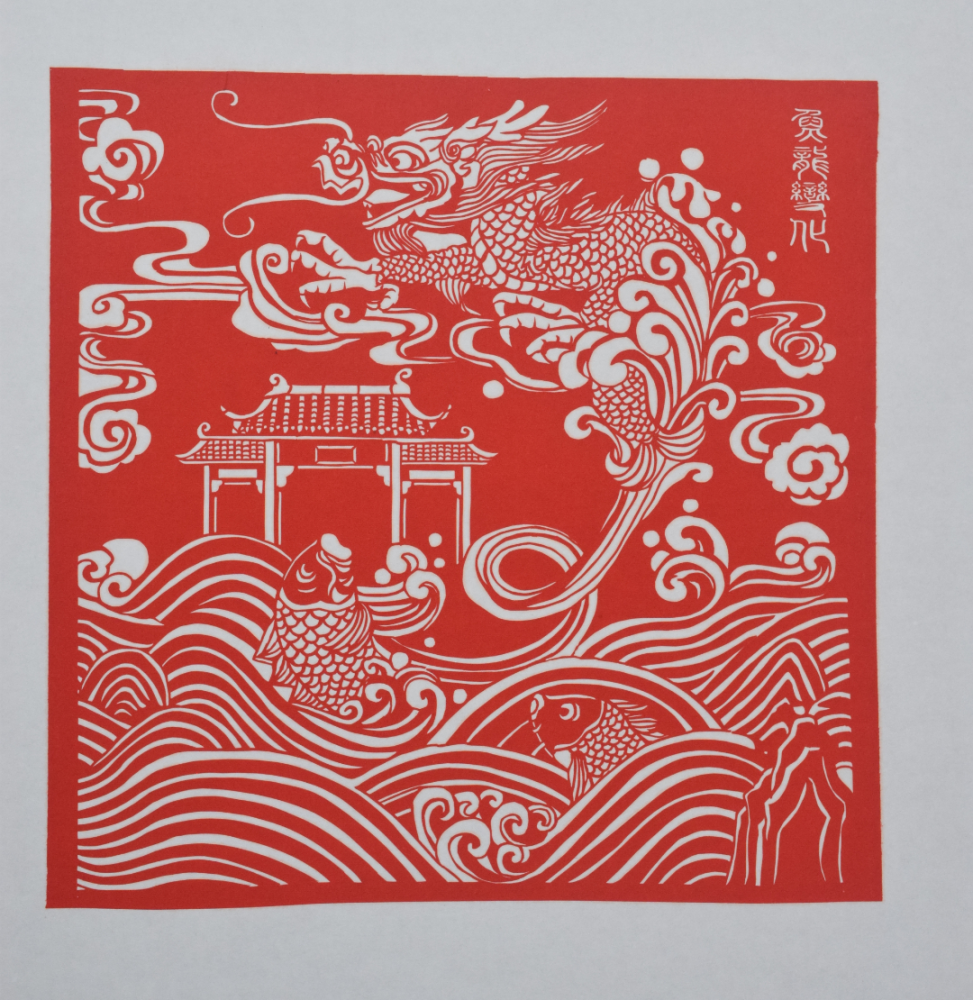
In the new era, Pujiang Paper-Cutting has not been sealed by time, but has stepped into a new stage of development through inheritance and innovation. It breaks through the limitations of traditional folk inheritance, integrates with education, cultural and creative industries and cultural exchange, and makes this ancient art glow with new vitality in the modern society.
- Inheritance in Education: Pujiang is the first county in China to popularize Paper-Cuttingamong students. Paper-Cuttinglabor skills courses are set up in primary and secondary schools, with self-compiled teaching materials and special teacher training. Tens of thousands of students learn Paper-Cutting skills, making the seed of traditional art take root in the hearts of the younger generation.
- Innovation in Cultural and Creative Industries: Pujiang Paper-Cuttingcombines traditional patterns with modern products, and launches a variety of cultural and creative works such as Paper-Cuttingbookmarks, silk scarves, porcelain decorations and light and shadow Paper-Cutting lamps. These works retain the classic artistic connotation and meet the aesthetic needs of modern people, making Paper-Cutting walk into people's daily life in a new form.
- Going Global in Cultural Exchange: A large number of Pujiang Paper-Cuttingworks have been exhibited in many countries and regions, showing the unique charm of Chinese folk art to the world. The innovative works combining traditional techniques with modern themes such as Chinese great powers and Jiangnan scenery have become a bridge for cultural communication between China and the world, letting the world know the beauty of Pujiang Paper-Cuttingand the profoundness of Chinese culture.
For thousands of years, Pujiang Paper-Cutting has been blooming vividly on the red paper with the ingenuity of generations of craftsmen. It is a witness of Jiangnan's folk culture, a carrier of Chinese people's good wishes, and a living fossil of the development of Chinese folk art. From the folk lanes to the world stage, from traditional rituals to modern life, Pujiang Paper-Cutting has never stopped growing and evolving.
It is not only a piece of Paper-Cutting, but also a kind of cultural gene rooted in the blood of the Chinese nation, a kind of artistic belief passed on from generation to generation, and a warm link connecting the past and the future. In the years to come, this poetic art on paper will continue to bloom more brilliant flowers in the inheritance and innovation, carrying the beauty of Chinese culture and moving towards a more distant future.