In the vast land of northern Anhui, by the Huaihe River, Fuyang paper-cutting has bloomed as a brilliant folk art flower for thousands of years. With a pair of scissors and a piece of red paper, local craftsmen carve out the simple wishes of the people and the unique cultural charm of the Huaihe River basin. It is not only a skill passed down from generation to generation, but also a carrier of Chinese folk culture, bearing the memories and aspirations of ordinary people. Let's explore the time-honored art that blends the characteristics of northern and southern Chinese paper-cutting and has become a national intangible cultural heritage.
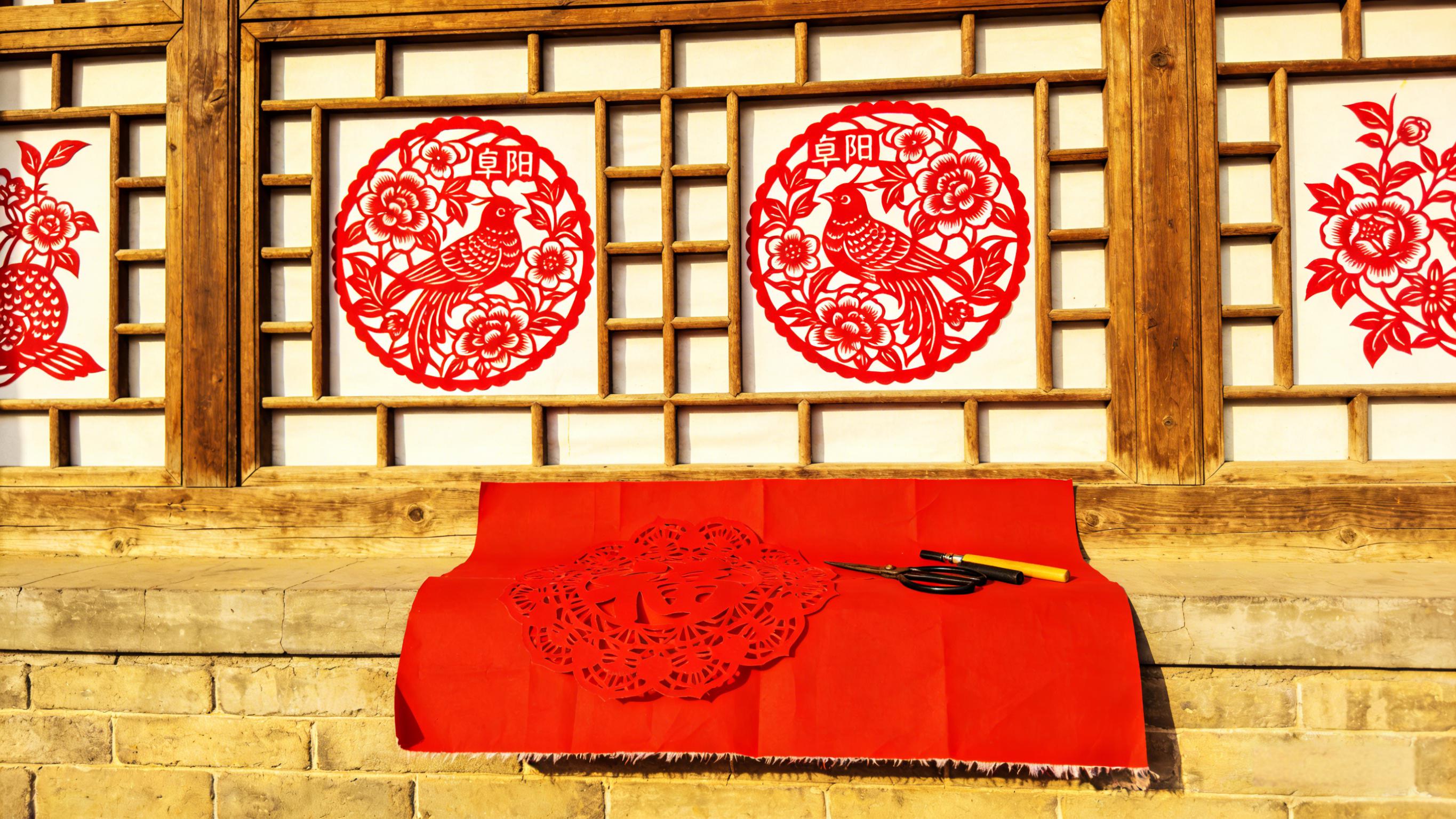
- A Millennium History Rooted in the Huaihe River Basin
Fuyang paper-cutting has a long history that can be traced back to the Southern and Northern Dynasties, with its origin closely linked to the life of the people in the Huaihe River basin. The folk customs and cultural exchanges in this area have bred the unique development track of this art.
- Ancient Origin: Historical records and cultural relics show that the custom of paper-cutting has existed in Fuyang since the Southern and Northern Dynasties. The paper-cutting ornaments used in folk customs such as dressing up have become an integral part of local life, and the silk-cutting custom in the Tang Dynasty also laid a foundation for the development of paper-cutting art here.
- Flourishing in the Ming and Qing Dynasties: In the Ming and Qing Dynasties, Fuyang paper-cutting stepped into a period of prosperity. Local women took paper-cutting as a necessary skill, and craftsmen who made a living by paper-cutting appeared one after another. They created a large number of paper-cutting samples for embroidery such as shoe flowers and hat flowers, making the art integrate into daily life more deeply.
- Protection as a National Intangible Cultural Heritage: In 2008, Fuyang paper-cutting was included in the extended project list of the first batch of national intangible cultural heritage of China, and its birthplace was also named the "Hometown of Paper-Cutting" by the Ministry of Culture, which marked that this folk art has been officially recognized and protected at the national level.
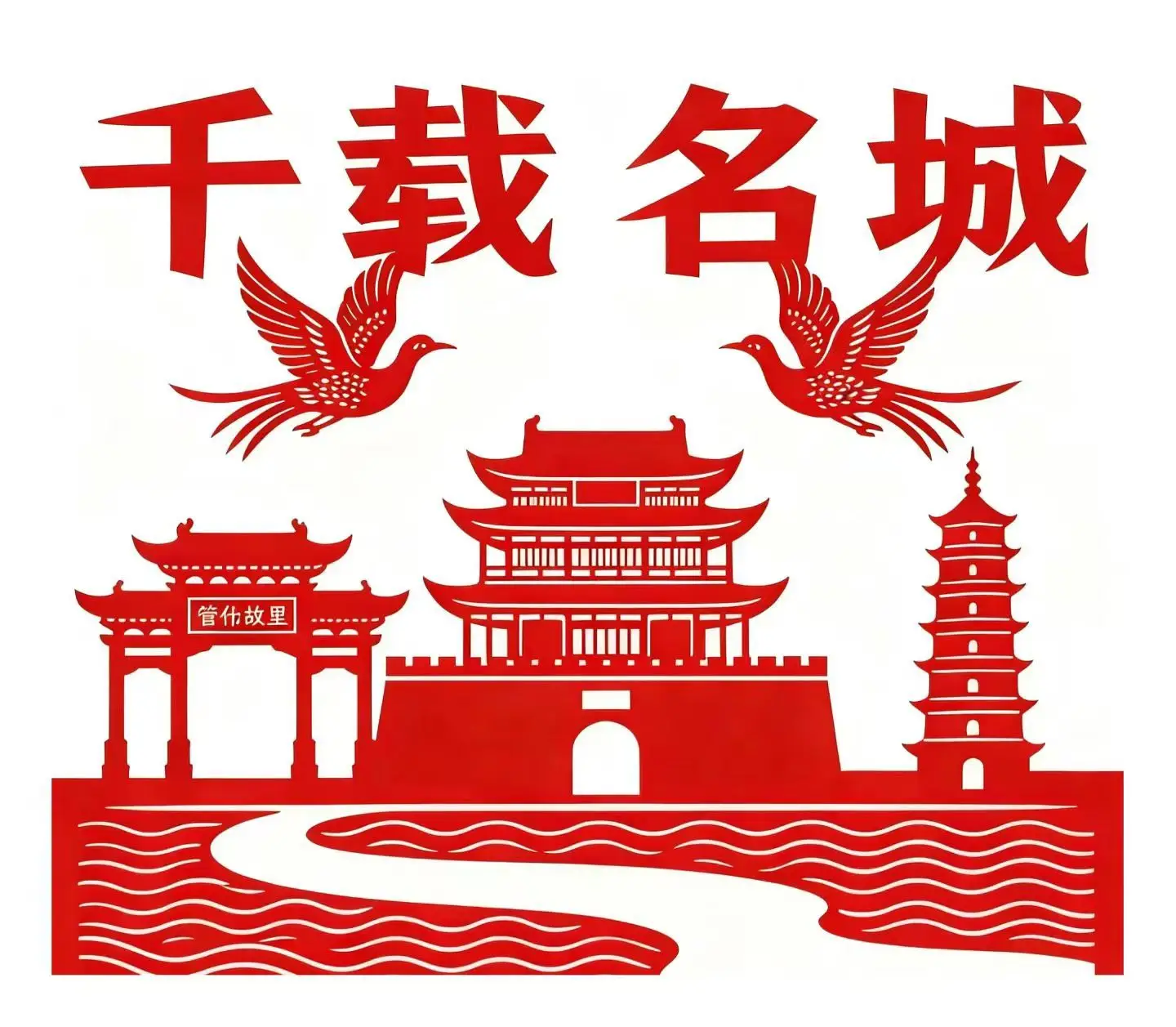
- Unique Artistic Features Blending Northern and Southern Styles
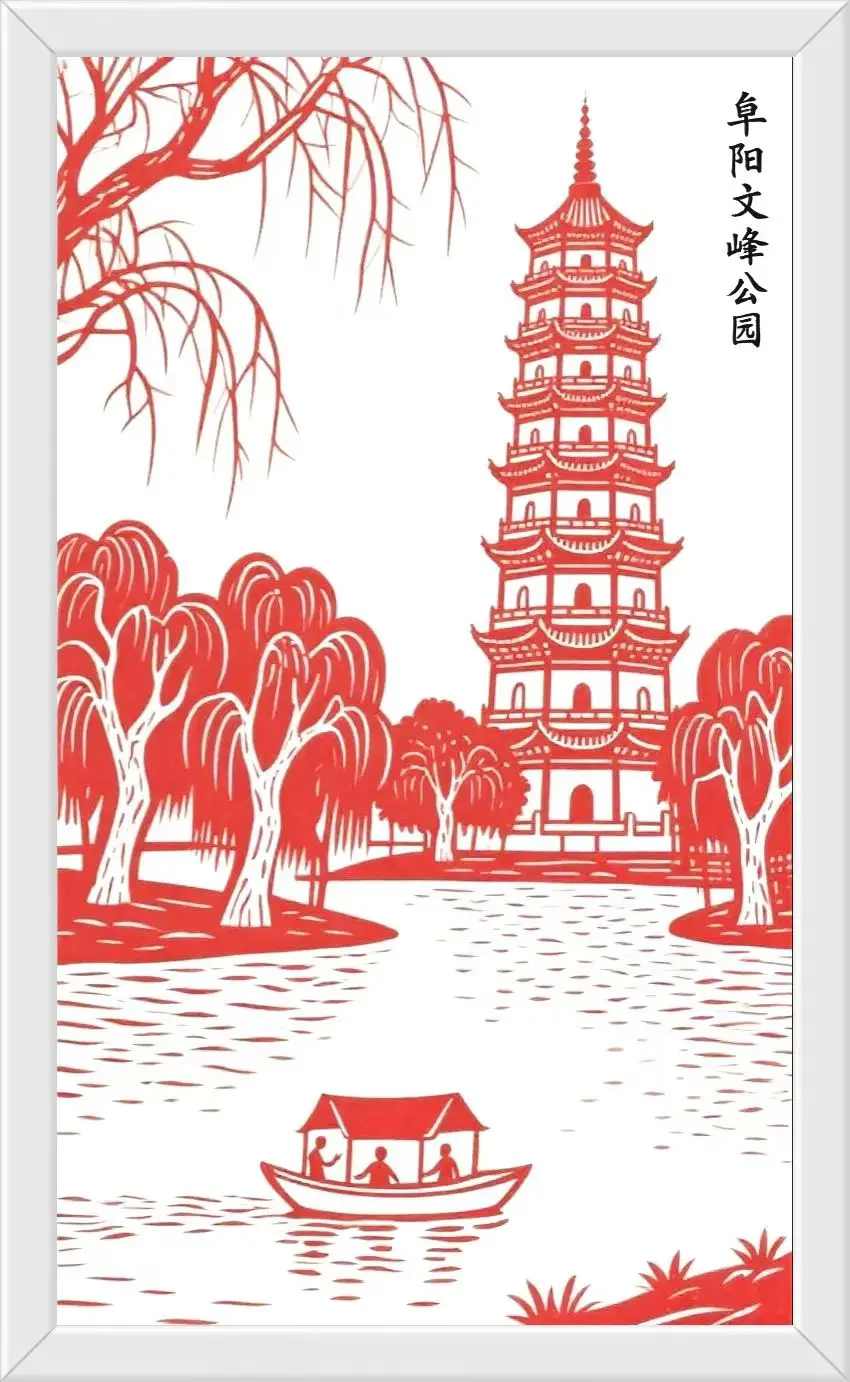
The most distinctive feature of Fuyang paper-cutting is that it perfectly integrates the artistic characteristics of northern and southern Chinese paper-cutting, forming a unique style of "ruggedness with delicacy, simplicity with beauty". Its production tools are simple, but its expression techniques are rich and diverse, showing extraordinary artistic charm.
- Simple Production Tools: Only a pair of scissors or a carving knife, plus colored rice paper (mainly red rice paper) is enough to create exquisite paper-cut works. The simplicity of the tools makes it easy for the art to spread among the people and be passed down from generation to generation.
- Blending of Northern and Southern Styles: It inherits the ruggedness and boldness of northern paper-cutting, with concise and bold composition, and also absorbs the delicacy and exquisiteness of southern paper-cutting, with delicate and vivid patterns. It has achieved the harmonious unity of rough and delicate, static and dynamic, virtual and real, and has a unique artistic appeal.
- Diverse Expression Forms: Fuyang paper-cutting has a variety of forms, including monochrome, color filling, dyeing and collage. It flexibly uses cutting, carving and tearing techniques, and alternates Yin and Yang carving methods. The thick and thin lines are combined skillfully, making the works have rich layers and strong decorative effects.
- Concise and Vivid Modeling: The modeling of Fuyang paper-cutting is good at exaggeration and generalization, abandoning complicated details and capturing the most typical characteristics of the object. Whether it is flowers, birds, fish and insects or folk scenes, it can be shaped with a few simple cuts, which is vivid and full of vitality.
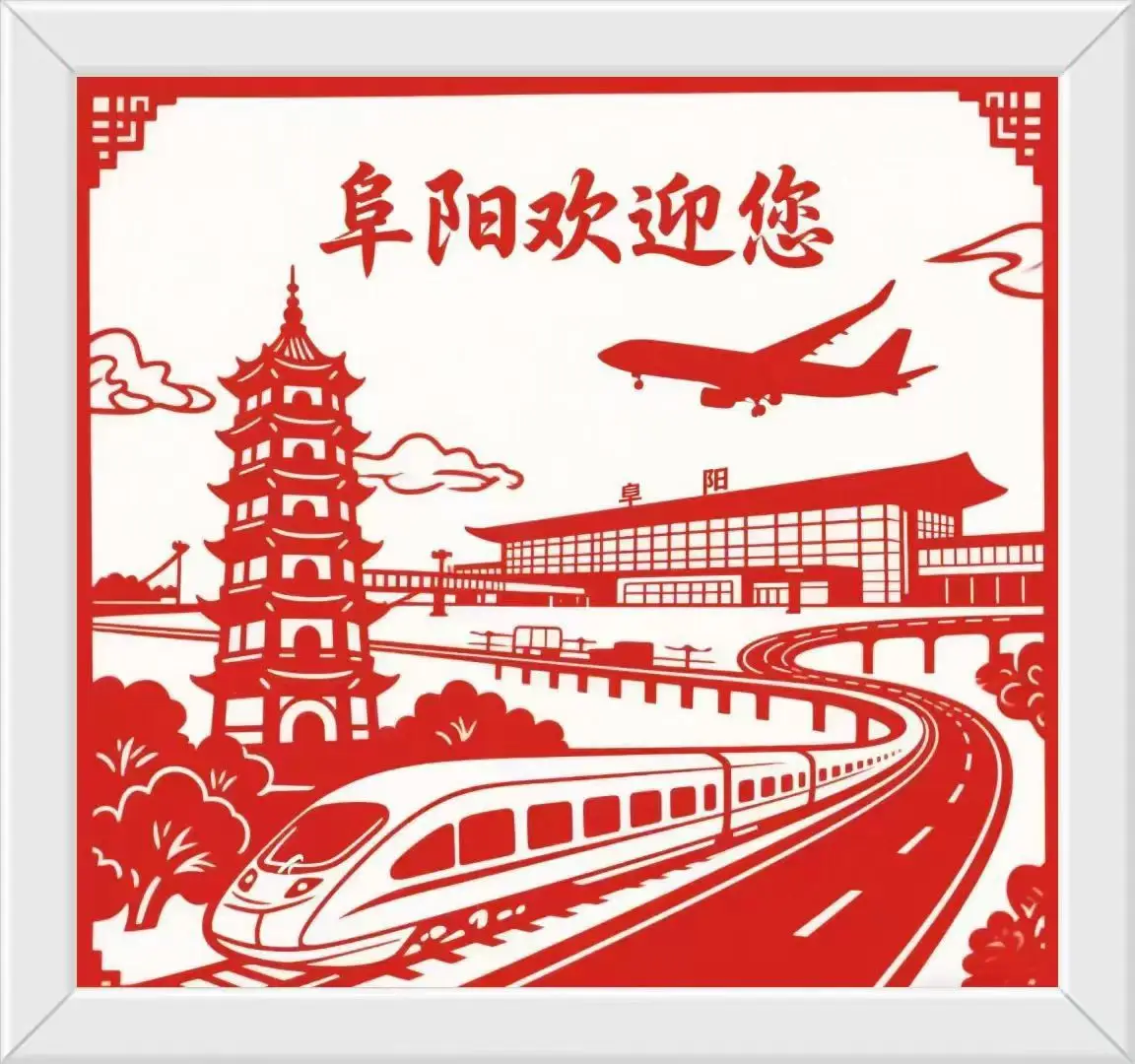
- Profound Cultural Connotations in Folk Life
Fuyang paper-cutting is deeply rooted in the folk life of the Huaihe River basin, and every work is a reflection of the local people's life emotions and beautiful wishes. It is closely connected with various folk rituals and daily life, and has become an important carrier of expressing folk culture and sustenance of spiritual beliefs.
- Auspicious Themes Full of Folk Wishes: The themes of Fuyang paper-cutting are mostly based on folk life, with a large number of auspicious and festive contents such as bumper grain harvests, prosperous six domestic animals, surplus year after year, and phoenixes singing towards the sun. These themes are all the yearnings of the local people for a better life, and they use the way of implying homophony and borrowing objects to express their wishes for good luck, prosperity and family happiness. For example, "five blessings holding longevity" uses the homophony of bat and "blessing", and "continuous birth of noble children" uses the homophony of lotus and "continuous".
- Integration with Various Folk Customs: Fuyang paper-cutting runs through all kinds of folk activities in the local area. During the Spring Festival, window grilles and door notes are pasted to welcome the new year with a festive atmosphere; at weddings, happy flowers are cut to bless the newlyweds for a happy marriage; in daily life, it is used as the base sample of embroidery for clothes, shoes and hats, decorating the ordinary life of the people. It is not only an ornament, but also a part of folk culture.
- Reflection of Huaihe River Basin Culture: As a cultural symbol of the Huaihe River basin, Fuyang paper-cutting condenses the living wisdom and cultural psychology of the local people. The frequent floods in the Huaihe River basin make the local people yearn for a stable and happy life more, and these beautiful wishes are all carved into the paper-cut works, making the art carry the unique cultural memory of the Huaihe River basin.
- Inheritance and Innovation in the New Era
In the new era, Fuyang paper-cutting, as a national intangible cultural heritage, has not been buried by the times, but has gained new development vitality through the combination of inheritance and innovation, walking out of a new road of traditional folk art adapting to modern society.
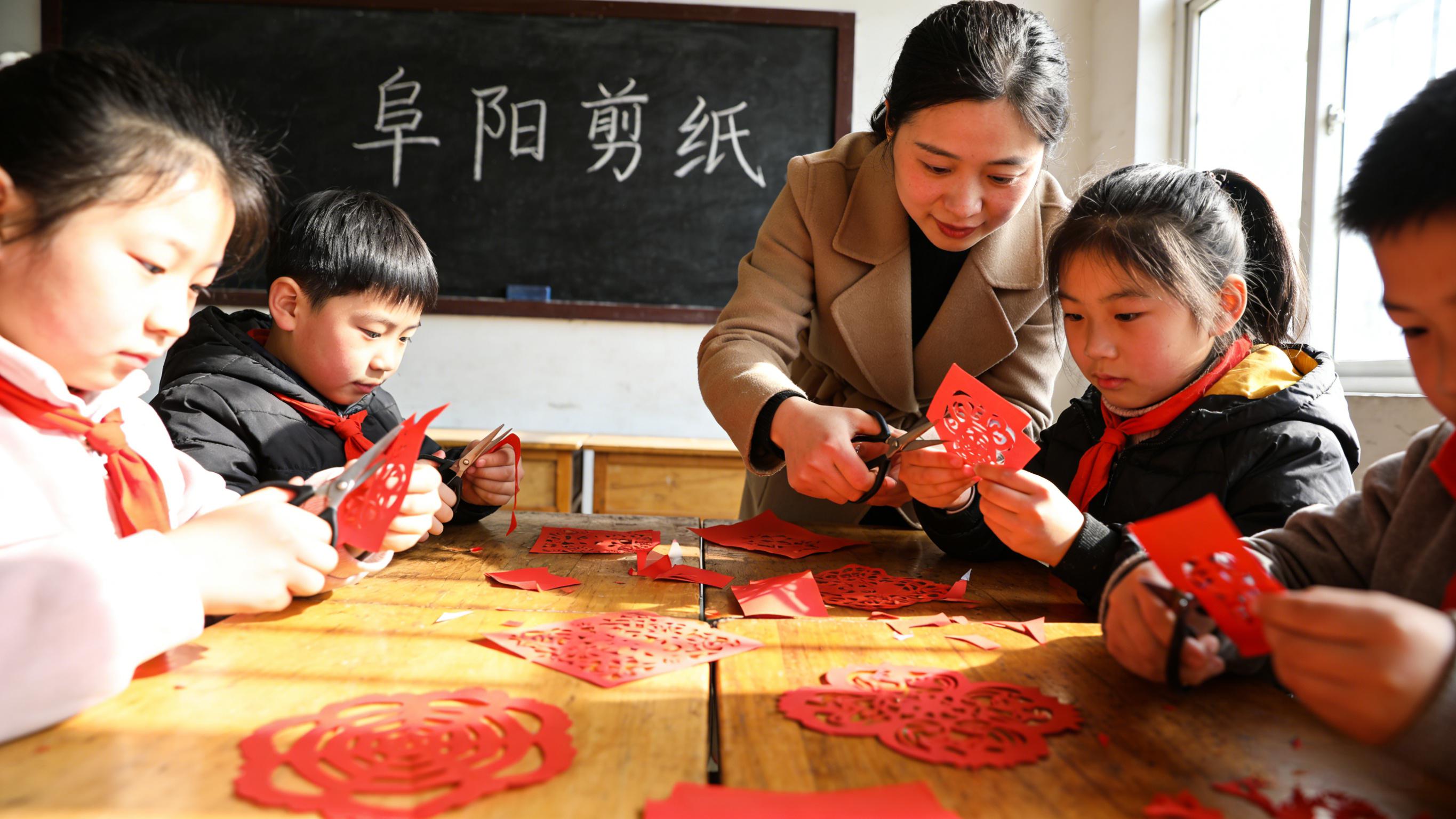
- Inheritance in Education: Fuyang paper-cutting has entered the campus and become a part of the quality education curriculum. Primary and secondary schools set up paper-cutting interest classes, and colleges and universities carry out relevant academic research, letting young people understand and master this traditional skill, and cultivating a new generation of inheritors for the art.
- Innovation in Cultural and Creative Products: Combining with modern aesthetic and market demand, Fuyang paper-cutting has been integrated into various cultural and creative products, such as paper-cutting bookmarks, cultural and creative notebooks, decorative paintings and handicrafts. The innovative transformation makes the traditional art walk into modern life and become a fashionable cultural product loved by people.
- Communication on the International Stage: Fuyang paper-cutting has been exhibited in many cities in China and even in foreign countries, and large-scale paper-cut works with themes of the Olympic Games and national unity have also appeared, making this folk art go to the world. It has become a cultural bridge for spreading Chinese folk culture and letting the world understand the charm of Chinese intangible cultural heritage.
- Protection of Traditional Skills: Local cultural departments have set up special research institutions and protection centers, sorted out and collected a large number of traditional paper-cut works and skills, recorded the creation process of paper-cutting with video and text, and ensured the complete inheritance of traditional skills.
For thousands of years, Fuyang paper-cutting has been passed down from generation to generation with the life of the people in the Huaihe River basin, with scissors and paper as media, carving the beauty of life and inheriting the cultural memory. It is a microcosm of Chinese folk art, condensing the simple wisdom and beautiful wishes of the Chinese people. In the new era, this time-honored art is still blooming with unique charm, and under the joint efforts of inheritance and innovation, it will surely go further and longer, making the folk culture of the Huaihe River basin shine forever in the treasure house of Chinese culture.