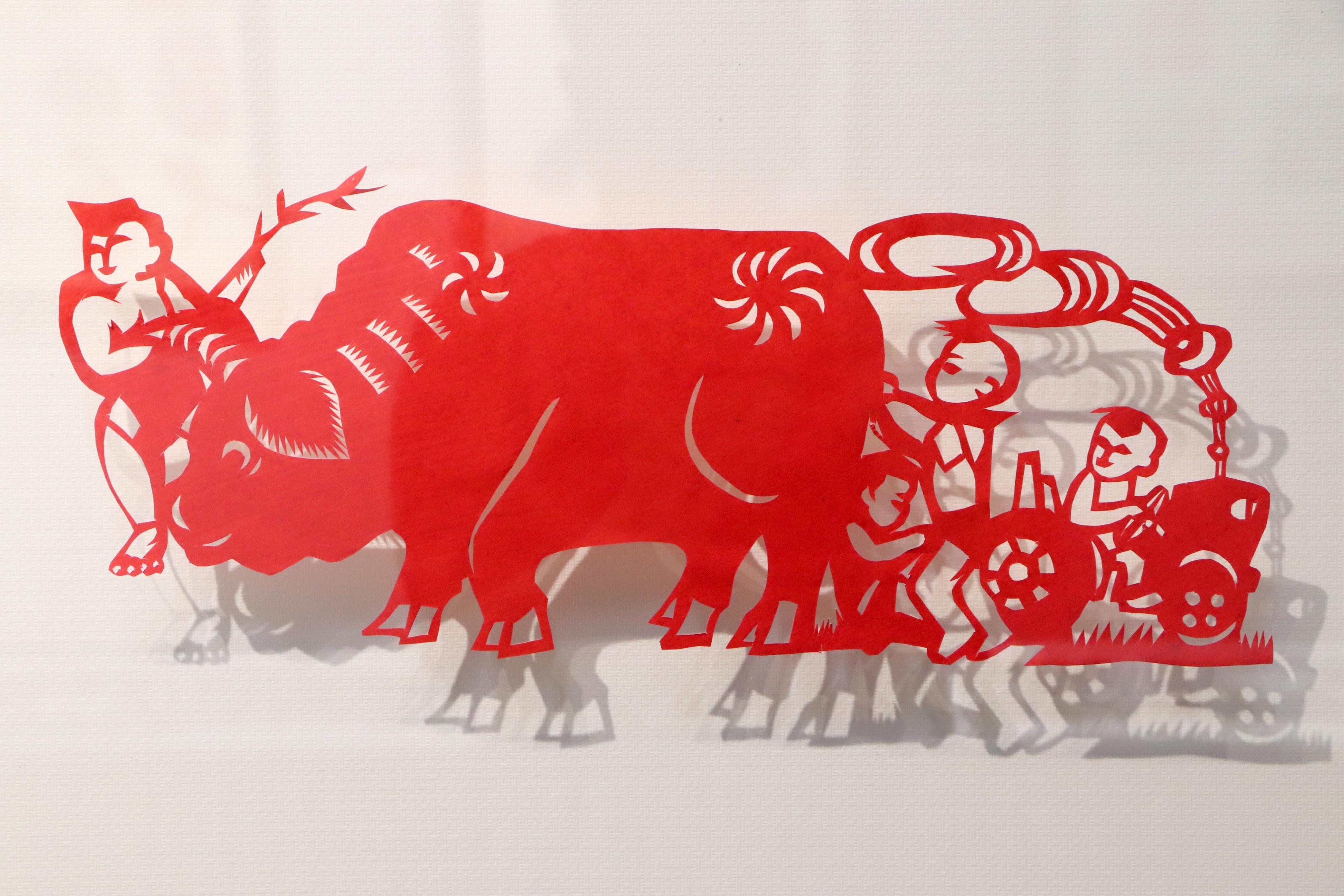
On the vast black soil of Heilongjiang, Fangzheng Paper-Cutting, like a folk custom flower nourished by years, crosses a hundred years of time with the simplest materials and the most vivid skills, carrying the cultural memories and life love of multiple ethnic groups. Without complicated decorations, it carves the implicitness of Oriental aesthetics and the boldness of northeast folk customs into the most regional artistic symbols with the strength of each cut, becoming a bright scenery among the national intangible cultural heritages.
The birth and development of Fangzheng Paper-Cutting is a beautiful encounter of cultural integration. It originated from the sacrificial activities of Manchu Shamanism. Initially, it was an important prop used by the ancient Manchu people for praying for blessings and sacrifices. Those simple, bright, bold and simple "Momo God" Paper-Cuttings, with front-facing shapes, left-right symmetry, separated fingers and positive carved facial features, fully show the simple character and religious beliefs of the Manchu people, and become a vivid relic of Shamanism culture. Later, with the wave of "moving east to the northeast", the Paper-Cutting skills of the Han nationality in the Central Plains were introduced into Fangzheng, penetrating and integrating with the local Manchu Paper-Cutting. The exquisite skills and auspicious meanings of Central Plains Paper-Cutting collided with the unique artistic style of Fangzheng Paper-Cutting — it not only has the boldness and grandeur of Manchu Paper-Cutting, but also has the delicacy and vividness of Central Plains Paper-Cutting, gradually forming a unique artistic system on the black soil.
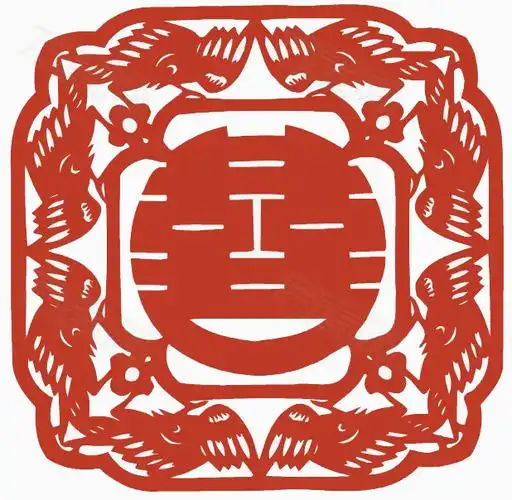
The charm of Fangzheng Paper-Cutting lies in its creative concept of "simplicity is the ultimate sophistication" and its exquisite and unparalleled skills. Its tools are extremely simple: only a pair of scissors carefully modified by the artist and a piece of bright red rice paper — the modified scissors are more exquisite and handy, easy to control the speed and intensity of cutting; the bright red rice paper carries the Chinese people's yearning for auspiciousness and joy, with bright but not exaggerated color, becoming the most classic carrier of Paper-Cutting art. The creation process seems simple, but in fact, it hides mysteries. The artist needs to conceive the outline in his mind first, or sketch a draft simply, then cut out the overall structure of the work with freehand brushwork, boldly divide the space, and show grandeur; then modify the details with delicate and smooth cutting methods, combining positive and negative carving — positive carving retains lines, negative carving retains surfaces, and emptiness and reality coexist, making every line full of rhythm. This technique of "boldly laying down ink and carefully finishing" is similar to the artistic essence of Chinese painting, making Fangzheng Paper-Cutting look magnificent from a distance and exquisite in details up close. With one cut, whether thick or thin, curved or straight, it can perfectly show the charm of the work.
The themes of Fangzheng Paper-Cutting are a history of black soil life carved with scissors, and each work is full of the local people's love for life and yearning for beauty. Its themes are all-encompassing: there are works reflecting folk customs, such as the northeast folk scenes like "window paper pasted outside" and "young girls holding tobacco pouches", which vividly reproduce the life scenes during the period of "moving east to the northeast"; there are also auspicious patterns — peonies symbolize wealth and glory, bats imply longevity and health, and carp matched with lotus flowers is the good wish of "abundance year after year". These patterns run through the festival Paper-Cuttings and become an important way for people to express their wishes for blessings. More uniquely, Fangzheng Paper-Cutting draws a lot of materials from the natural and living scenes of the black soil. The ice lake with leaping fish during winter fishing, the abundant grain in the fields, the birds and beasts in the forests, and the cheerful postures of northeast Errenzhuan can all become sources of inspiration for artists. These works are full of strong local flavor, showing the bold, enthusiastic and life-loving character of the people on the black soil incisively and vividly. In addition, elements such as "Momo God" and "totem animals" in Manchu culture are also widely used, becoming the unique symbol that distinguishes Fangzheng Paper-Cutting from other Paper-Cutting schools.
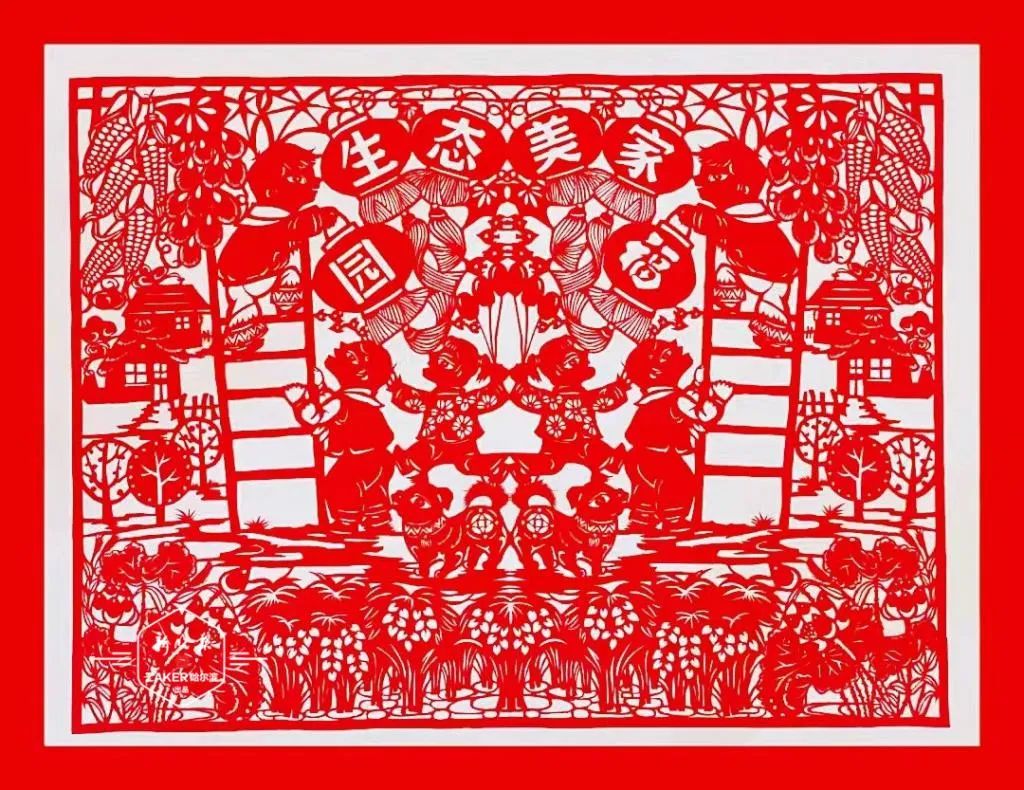
After a hundred years of inheritance, Fangzheng Paper-Cutting has long surpassed a simple art form and become an important carrier of carrying black soil culture and connecting national emotions. From the past, when women sat around the kang to amuse themselves in their spare time, to now entering the intangible cultural heritage exhibition hall and stepping onto the art stage, the development road of Fangzheng Paper-Cutting has witnessed the living inheritance and innovation of black soil culture. Today, with the support of the local government and the efforts of artists, Fangzheng Paper-Cutting has got rid of the predicament of "being unknown in the boudoir". By setting up kang classes and neighborhood classes, it has trained a large number of Paper-Cutting lovers in the way of "old leading new", making this ancient skill widely popular among the masses; at the same time, artists continue to innovate, combining Fangzheng Paper-Cutting with modern design, integrating it into cultural and creative products such as notebooks, bookmarks and clothing, allowing the ancient art to enter modern life and glow with new vitality. It has not only walked out of Fangzheng and the northeast, but also gone to the world. Thousands of works have been sent to Japan, the United States, France and other countries for cultural exchanges, becoming an important window to show the charm of Chinese intangible cultural heritage and tell Chinese cultural stories to the world.
One cut of paper carries a thousand-year-old cultural context; one piece of paper tells the feelings of the black soil. Without gorgeous rhetoric or complicated craft stacking, Fangzheng Paper-Cutting condenses the cultural integration of multiple ethnic groups, the folk customs of the black soil, and the good yearnings of the Chinese people in a small piece of red paper in the simplest way. It is the wisdom at the fingertips of artists, the cultural mark of the black soil, the bright pearl of national intangible cultural heritage, and a vivid epitome of the traditional culture of the Chinese nation. Today, this ancient skill is shining more brightly in the tide of the new era, attracting more people to understand it and inherit it, so that the elegance of Fangzheng Paper-Cutting will bloom forever in the long river of time.