1.Intangible Cultural Heritage Rooted in Yellow River Land
Binzhou lies on the alluvial plain of the lower Yellow River. Its flat land and thousand-year-old canal trade nurtured a distinctive folk paper-cut art form. The craft dates back to the Ming Dynasty, with ancient records documenting locals cutting paper into human figures and horse carriages. During the Ming and Qing dynasties, it boomed alongside the embroidery industry across villages. Rural women cut red paper patterns as stencils for shoe uppers, pillowcases and wedding garments, making paper-cutting a daily household craft.
In 2008, Binzhou folk paper-cutting was inscribed on the second batch of China’s National Intangible Cultural Heritage List, standing as a core representative of northern Yellow River paper-cut styles. Unlike delicate, soft southern Chinese paper-cutting, Binzhou’s style mirrors the straightforward, sincere temperament of northern Shandong residents. Its shapes are solid and primitive with bold, powerful lines; artisans avoid overly tiny intricate cuts, favoring exaggerated, flowing outlines. Subtle refinement hides within rough strokes, bearing the grand, imposing spirit of Yellow River culture.

2.Distinctive Aesthetics & Traditional Crafting Techniques
Binzhou folk paper-cutting follows a mature creative philosophy centered on “conception precedes cutting, heart and hands act as one”. Many seasoned artisans cut freely without draft sketches, following four fixed steps: conceptual design, paper folding, cutting and edge trimming. Symmetrical fold-cutting is its most recognizable technique: folding red paper along the central axis creates perfectly mirrored patterns with one cut. Classic motifs including circular flower clusters, paired carps, phoenixes and peonies rely on this method, embodying traditional Chinese ideas of yin-yang balance and family reunion.
Bright scarlet red serves as the primary color, paired with plain white and black paper; complex multi-color paper is rarely used. Red symbolizes joy and auspiciousness for Spring Festival window decorations and wedding ornaments, while black-and-white paper-cuts are reserved for rituals and folk wall hangings, delivering sharp visual contrast. Artisans adopt exaggerated deformation to highlight core features: oversize peony petals symbolize wealth and abundance, extended carp tails stand for surplus year after year, and enlarged facial features and headpieces distinguish opera characters without fine detailing. This simplified freehand style fully reflects the plain aesthetic of northern Shandong locals.
3.Diverse Auspicious Motifs & Cultural Symbolism
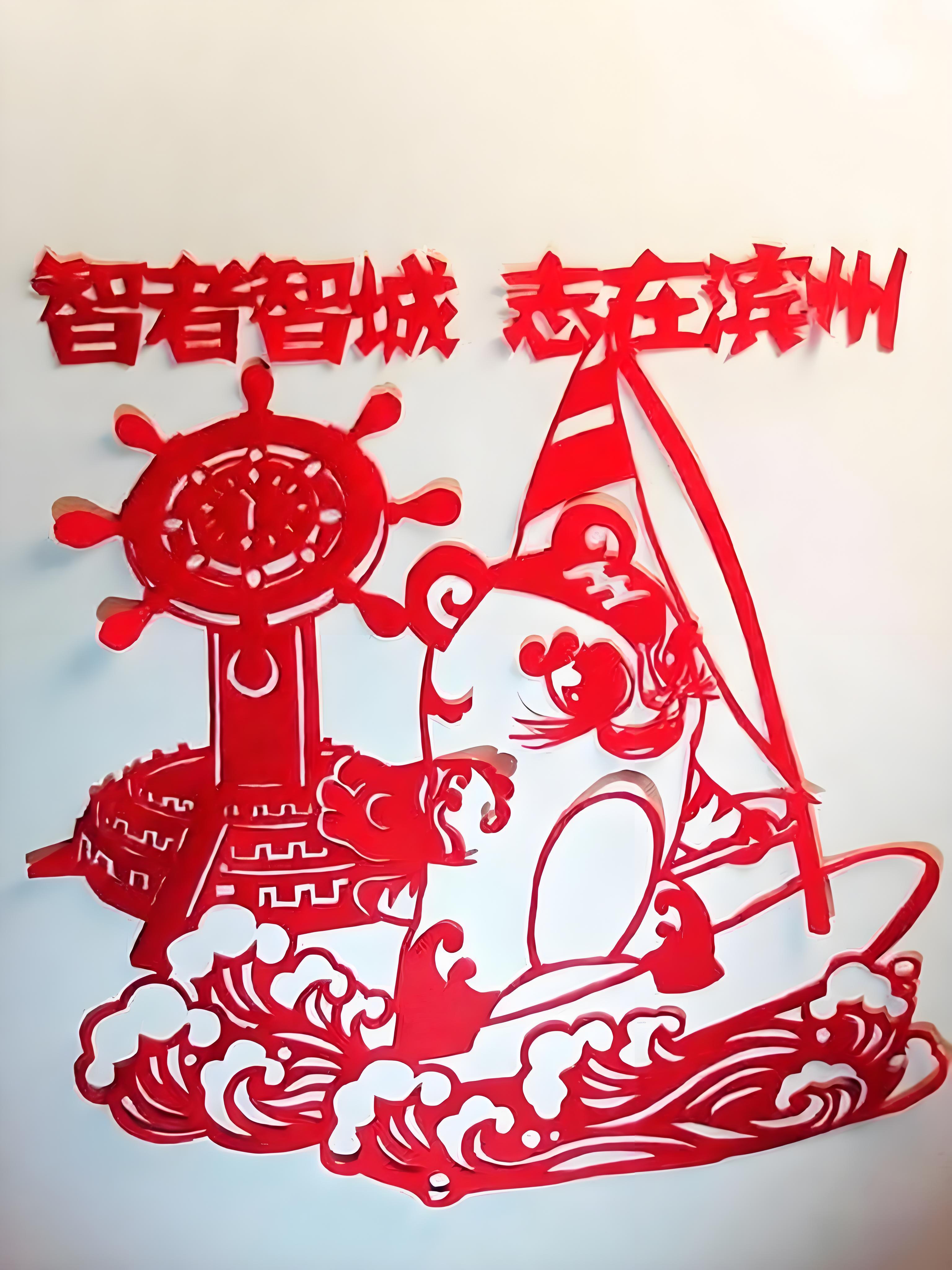
Binzhou paper-cut motifs are deeply rooted in northern Shandong daily life, with every pattern carrying unique auspicious meanings, divided into four main categories: floral & sacred beasts, folk opera, rural life and Yellow River scenery. Peony patterns appear across all works as the primary symbol of wealth and prosperity.
- Floral and sacred beast patterns inherit classic Chinese auspicious culture: fully bloomed peonies represent glory and wealth; phoenixes paired with peonies form “Phoenix Playing with Peonies”, wishing happy marriages and thriving families. Twin carps pun “abundance every year”; magpies on branches herald incoming good news; pomegranates with countless seeds symbolize prosperous offspring; pine and cranes stand for longevity, while roosters and sheep together mean great luck.
- Folk opera motifs highlight Binzhou’s regional identity, drawing heavily on local Lv Opera plays. Artisans capture classic opera scenes, depicting male, female, clown and warrior roles with simplified robes and headpieces, preserving local opera heritage and praising loyalty, kindness and happy marriages.
- Rural life patterns reconstruct ancient farming routines across northern Shandong: spring sowing, autumn harvests, village markets and family visits recreate the lively atmosphere of old plain villages. The local legend “Wang Xiao Lying on Fish” is frequently cut to carry forward filial piety, praising diligence and respect for elders through simple imagery.
- Exclusive Yellow River scenery sets Binzhou paper-cut apart from other regional styles: rushing river currents, river lantern rituals and ferry fishing boats record the unique landscape of the local mother river, forming a distinctive regional cultural marker.

4.Integrated into Folk Customs: Red Paper Holding Daily Warmth
In rural northern Binzhou, paper-cutting accompanies every life ritual and traditional festival, with red paper ornaments decorating all major milestones.
Spring Festival sees the widest use of paper-cuts: every household pastes window decorations and fortune character cutouts above doorframes, filling window panes with peonies, carps and zodiac patterns. Vibrant red paper chases away winter cold, carrying wishes for bumper harvests and household safety in the new year. Paper-cut New Year paintings sold at village markets become iconic Lunar New Year goods.
Paper-cuts are irreplaceable in wedding ceremonies: dragon-phoenix peony cutouts adorn wedding curtains, pillowcases, invitations and dowry chests, symbolizing lasting wealth and harmonious marriage for newlyweds. Wedding sedan chairs and gift trays are decorated with red floral cutouts to amplify festive joy.
Beyond celebrations, paper-cuts serve ritual worship, embroidery stencils and children’s shoe & hat ornaments. Young girls learned paper-cutting from childhood to decorate personal textiles, making this craft an essential feminine skill passed down mother to daughter for hundreds of years, embedding it deeply within folk life.
Today, free public paper-cut workshops run regularly in communities and schools, welcoming enthusiasts of all ages. Practitioners recreate classic patterns and design modern Yellow River-themed works. This ancient craft expands beyond folk decorations into cultural and creative ornaments, framed art and souvenir gifts, seamlessly fitting into modern daily life.

5.Tradition & Innovation: Modern Revival of Intangible Heritage
As a vital carrier of Yellow River culture, Binzhou folk paper-cutting evolves beyond simple traditional reproduction, achieving balanced inheritance and innovation led by craft inheritors.
For heritage preservation: local cultural centers and intangible heritage museums archive original paper-cut drafts from veteran craftsmen, fully documenting traditional folding, cutting and trimming techniques. Schools launch specialized intangible heritage courses to cultivate young people’s appreciation for paper-cutting, forming a complete intergenerational inheritance system. Community public classes teach basic cutting skills to elderly hobbyists, preserving authentic folk craftsmanship.
For creative innovation: artisans break limits of monochrome paper and classic folk motifs, integrating contemporary elements including Binzhou Yellow River Tower, urban scenery and rural revitalization themes. They develop three-dimensional and layered paper-cut art tailored for modern home decor, and print paper-cut patterns on silk scarves, porcelain and cultural jewelry, expanding the craft beyond paper art into daily consumer goods.
This thin sheet of red paper has transformed from Ming Dynasty embroidery stencils to national heritage exhibition pieces, evolving from window ornaments into a regional cultural symbol. Within its rough yet gentle cutting marks lie six centuries of heartfelt wishes from Yellow River residents, allowing the unique folk aesthetics of the Yellow River Basin to thrive endlessly.